Section 04
The Great Sphinx
Not built, but carved — cut downward out of a single ridge of limestone left standing in a quarry. For most of the last four thousand years it has been buried up to its shoulders.
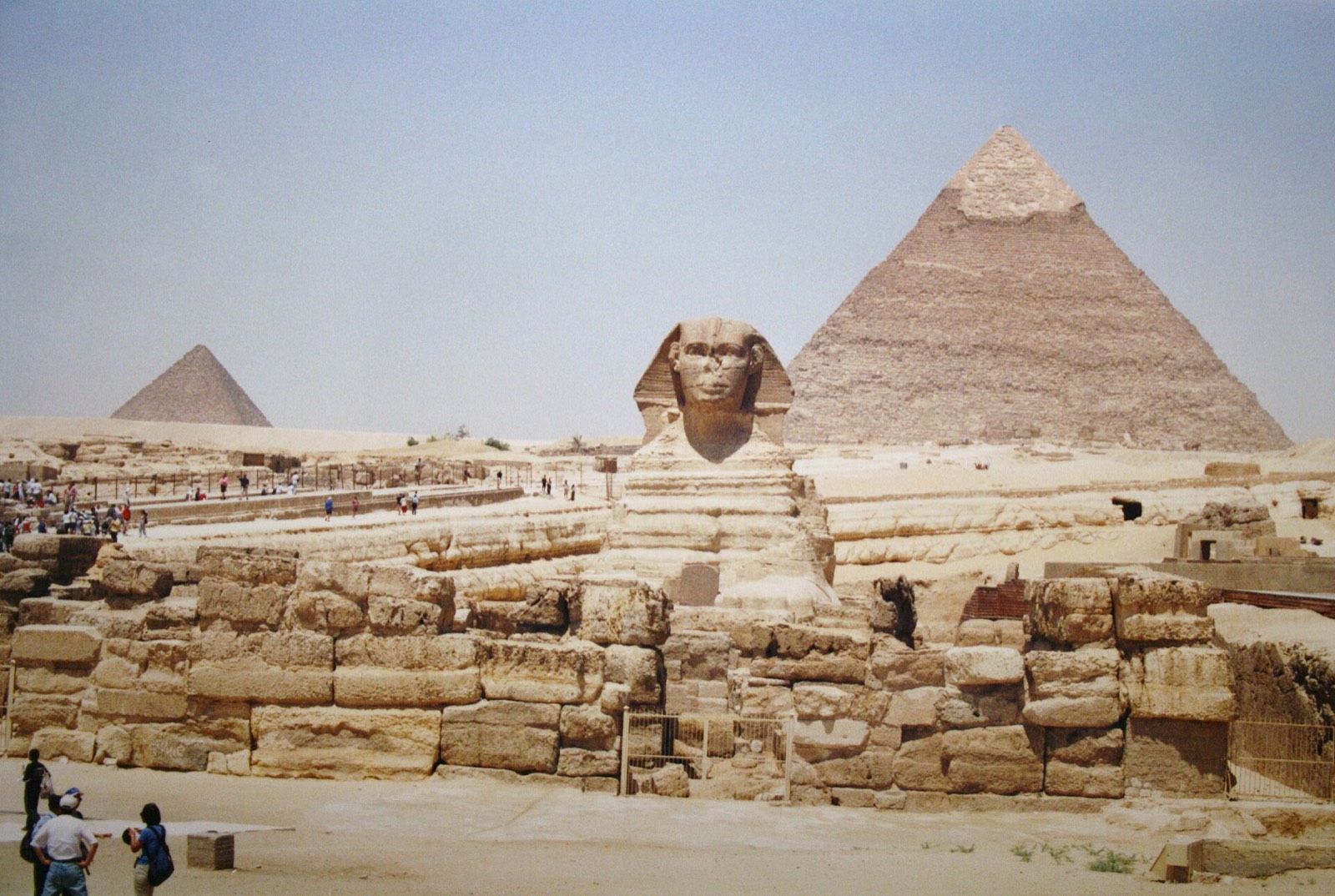
A single natural ridge of layered limestone.
Everything else at Giza was assembled. The Sphinx was excavated. The builders quarried a deep U-shaped trench into the plateau and simply left a mass of rock standing in the middle of it, then carved that mass into a recumbent lion with a human head. The stone they cut away went into the nearby temples — some of the core blocks in the Sphinx temple weigh over two hundred tonnes.
This method dictated the result. The ridge is made of horizontal geological layers of very different hardness. The head sits in a hard, fine bed, which is why it is still recognisable. The body is in softer, more porous strata, which is why it has eroded into deep horizontal channels and has needed repair — repeatedly, and starting in antiquity. The oldest restoration blocks cladding the paws date to the New Kingdom, more than a thousand years after it was carved.
The proportions are off for the same reason: the head is too small for the body. The carvers were limited by the width of usable hard stone available at the top of the ridge.
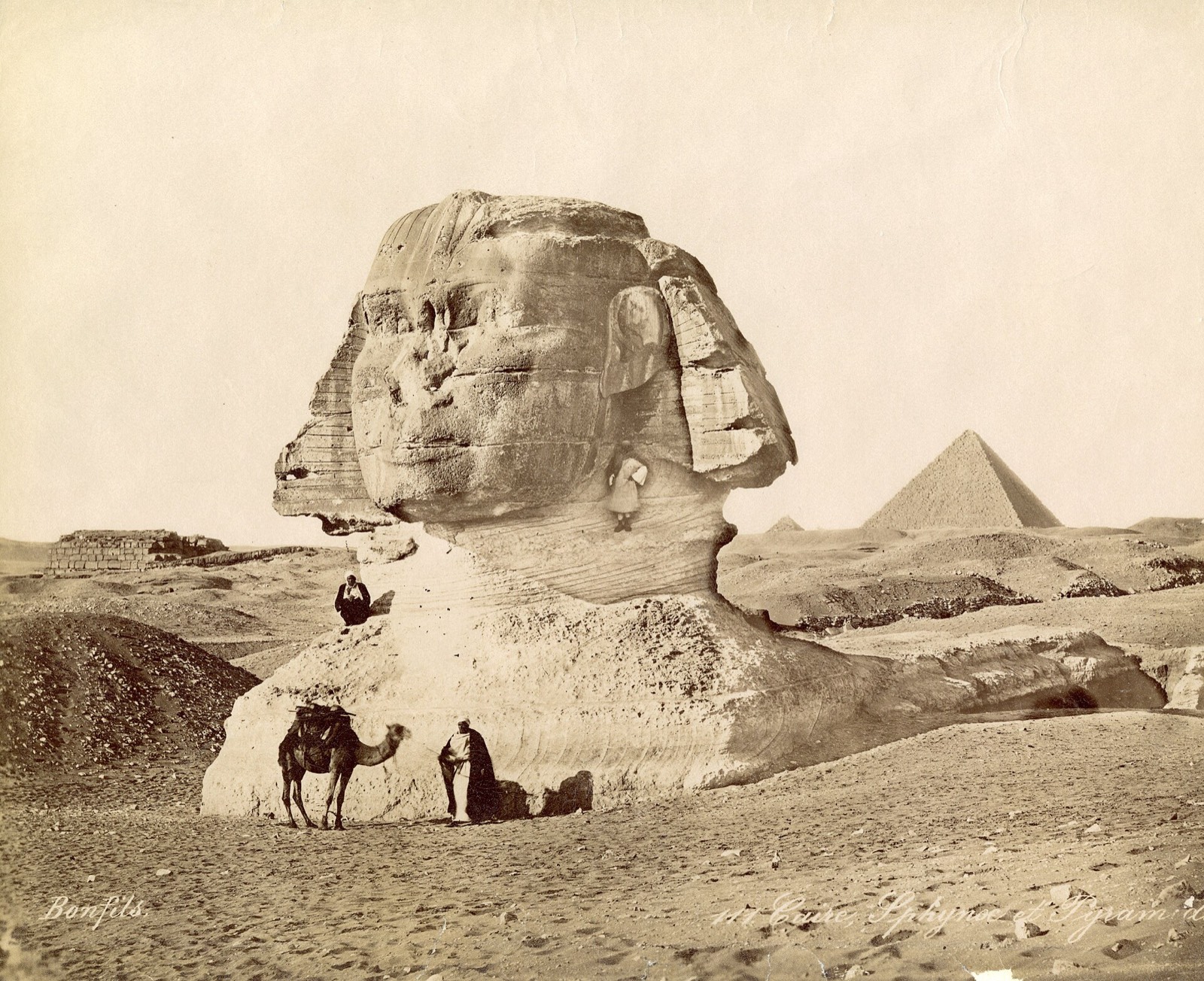
The enclosure is a trap for wind-blown sand. Left alone, it fills within a few decades. The history of the Sphinx is essentially a list of the people who have dug it out.
The most famous clearance is recorded on the Dream Stele, a granite slab standing between the paws — reused, incidentally, from a doorway of Khafre’s mortuary temple. It was set up by Thutmose IV around 1400 BCE and tells the story of a prince who fell asleep in the Sphinx’s shadow while hunting. The statue spoke to him in a dream, complaining that the sand was choking it, and promised him the throne if he cleared it away. He cleared it away. He became king.
Whether or not the dream happened, the stele is a piece of political self-justification by a pharaoh who may not have been the obvious heir — and it worked well enough that we are still repeating it. Later clearances were made under the Romans, by Giovanni Battista Caviglia in 1817, by Auguste Mariette, and finally by Émile Baraize between 1925 and 1936, which is the excavation that left it as it stands now.
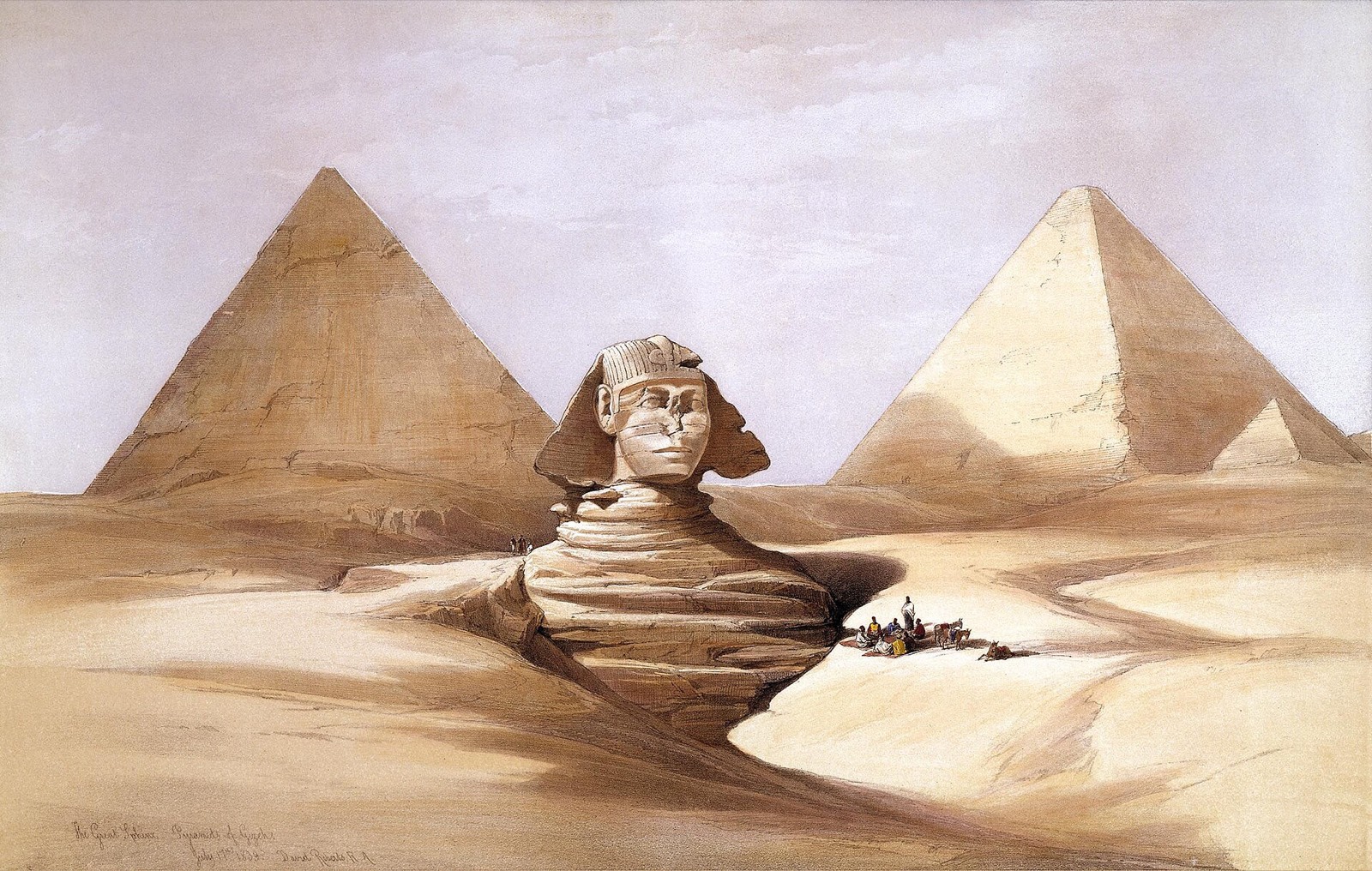
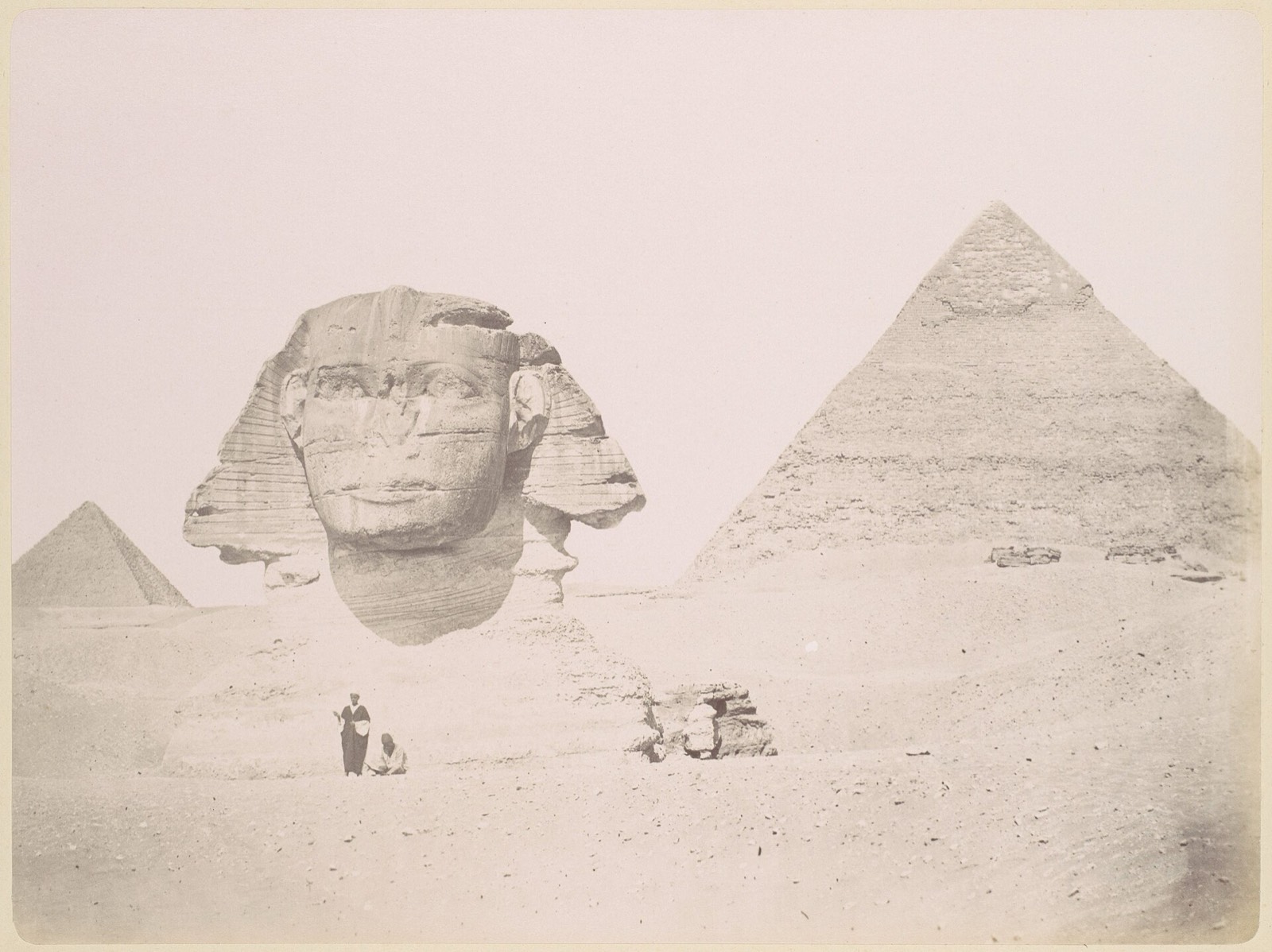
The sand of the desert upon which I lie has reached me. Promise me that you will do what I desire.
Who built it?
There is no inscription. Nothing on or near the Sphinx names its builder, which is unusual enough to have kept the question open for two centuries.
The mainstream attribution is to Khafre, on circumstantial but substantial grounds: the enclosure is cut into the plateau exactly where his causeway runs, the Sphinx temple in front of it is built of blocks quarried from the enclosure itself, and the layout of the whole thing is integrated with his complex rather than added to it. Some Egyptologists prefer Khufu, or Khafre’s brother Djedefre, arguing from the face’s proportions and from details of the causeway’s construction sequence.
Claims of far greater antiquity — that water erosion on the enclosure walls implies a date thousands of years earlier — are not accepted by geologists or Egyptologists working on the site, who attribute the weathering pattern to the softness of the middle strata and to salt crystallisation rather than to rainfall.