Section 02
The Pyramid of Khafre
The middle pyramid, and the one people usually photograph. It is smaller than Khufu's but stands on higher ground, which makes it look larger — an effect that is almost certainly deliberate.
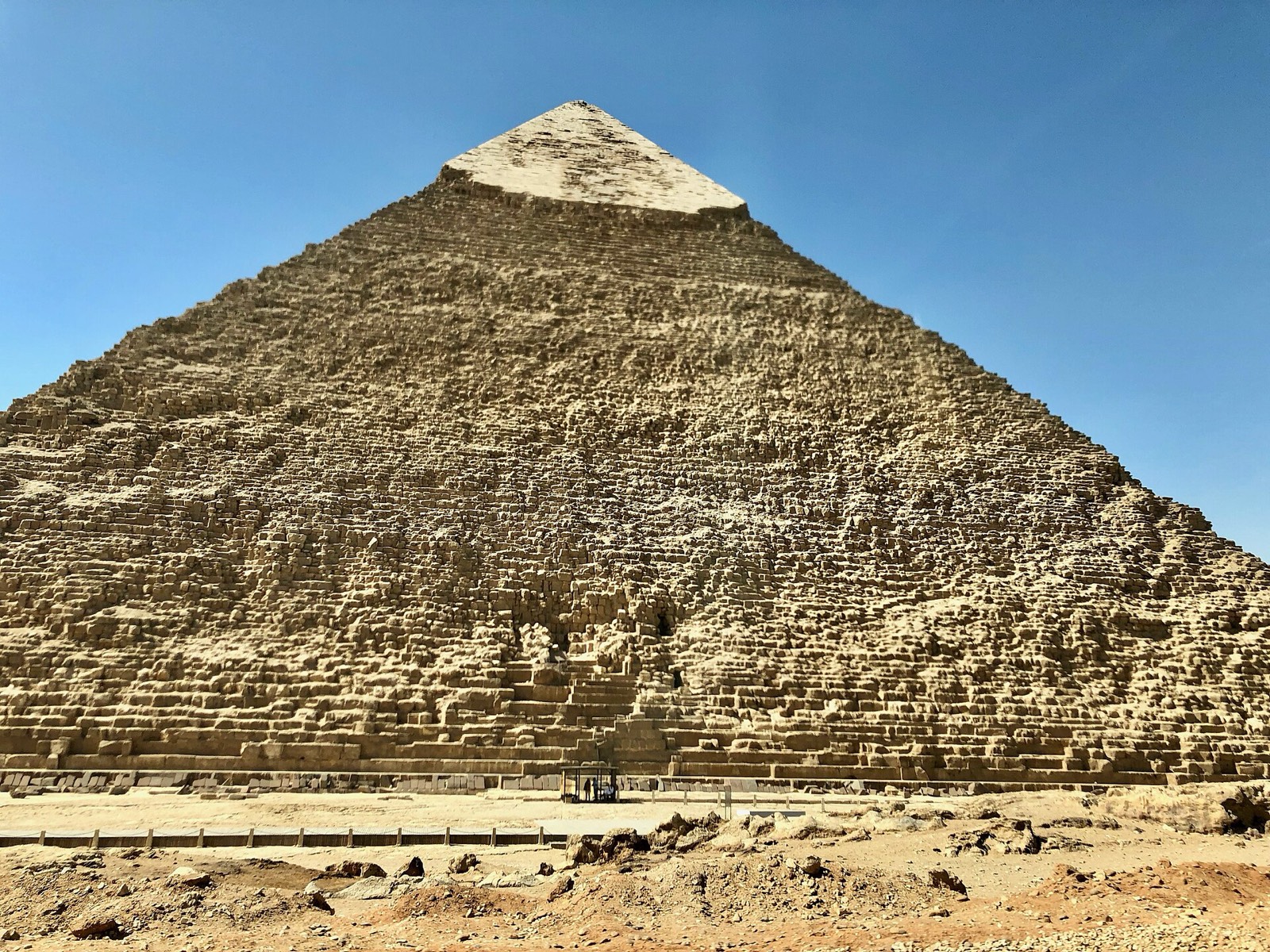
About 136.4 m today.
Steeper than Khufu's, which adds apparent height.
Its bedrock platform sits higher than Khufu's.
Khafre was Khufu’s son, and he inherited a problem: the best spot on the plateau was taken, and matching his father’s pyramid outright would have been both expensive and impolitic.
The solution was geometric. He placed his pyramid on a shelf of bedrock about ten metres higher up the slope, and gave it a steeper face — 53°10′ against Khufu’s 51°50′. The result is a monument with seven metres less actual height that reads, from almost every angle a visitor will ever see it from, as the tallest thing on the plateau. Photographs taken from the south and east consistently get this wrong.
To make room for it, the builders cut back into the rising rock on the north and west sides, leaving a quarried terrace around two sides of the pyramid. The stone that came out went into the construction.
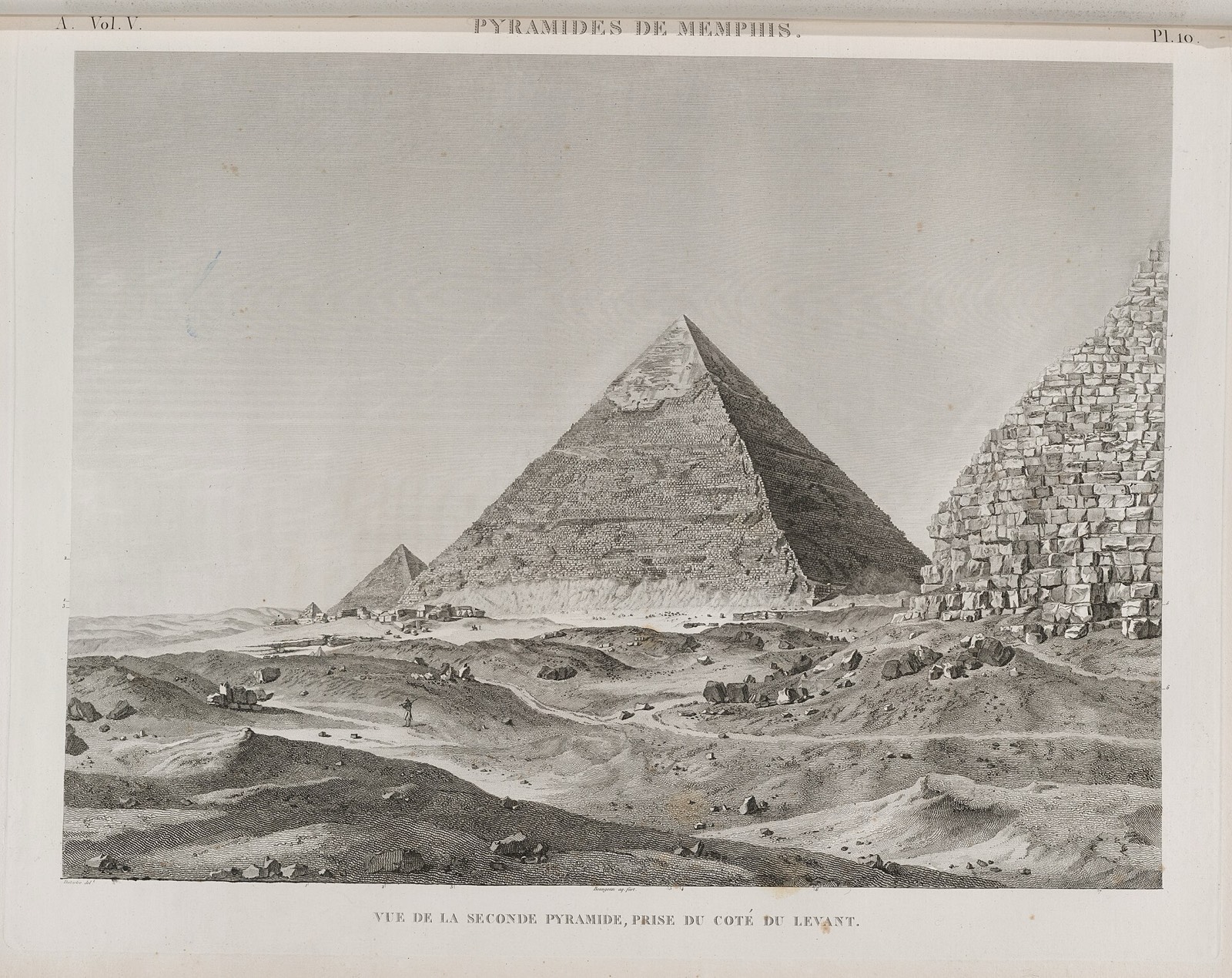
All three pyramids were finished with a smooth outer skin of fine white limestone from Tura, on the east bank of the Nile. Fitted, dressed and polished, it would have made each one a single unbroken plane of pale stone, blindingly bright in the sun — nothing like the stepped brown mass we see today.
That skin is almost entirely gone. A major earthquake in 1303 CE shook much of it loose, and the fallen blocks were an obvious source of cut, dressed stone for a growing Cairo. A great deal of medieval Cairo — mosques, walls, the citadel — is literally made of the outside of the pyramids.
Khafre’s pyramid kept its cap because the top was the hardest part to reach and the least worth the effort. It is the best surviving evidence of what all three were supposed to look like.
The valley temple
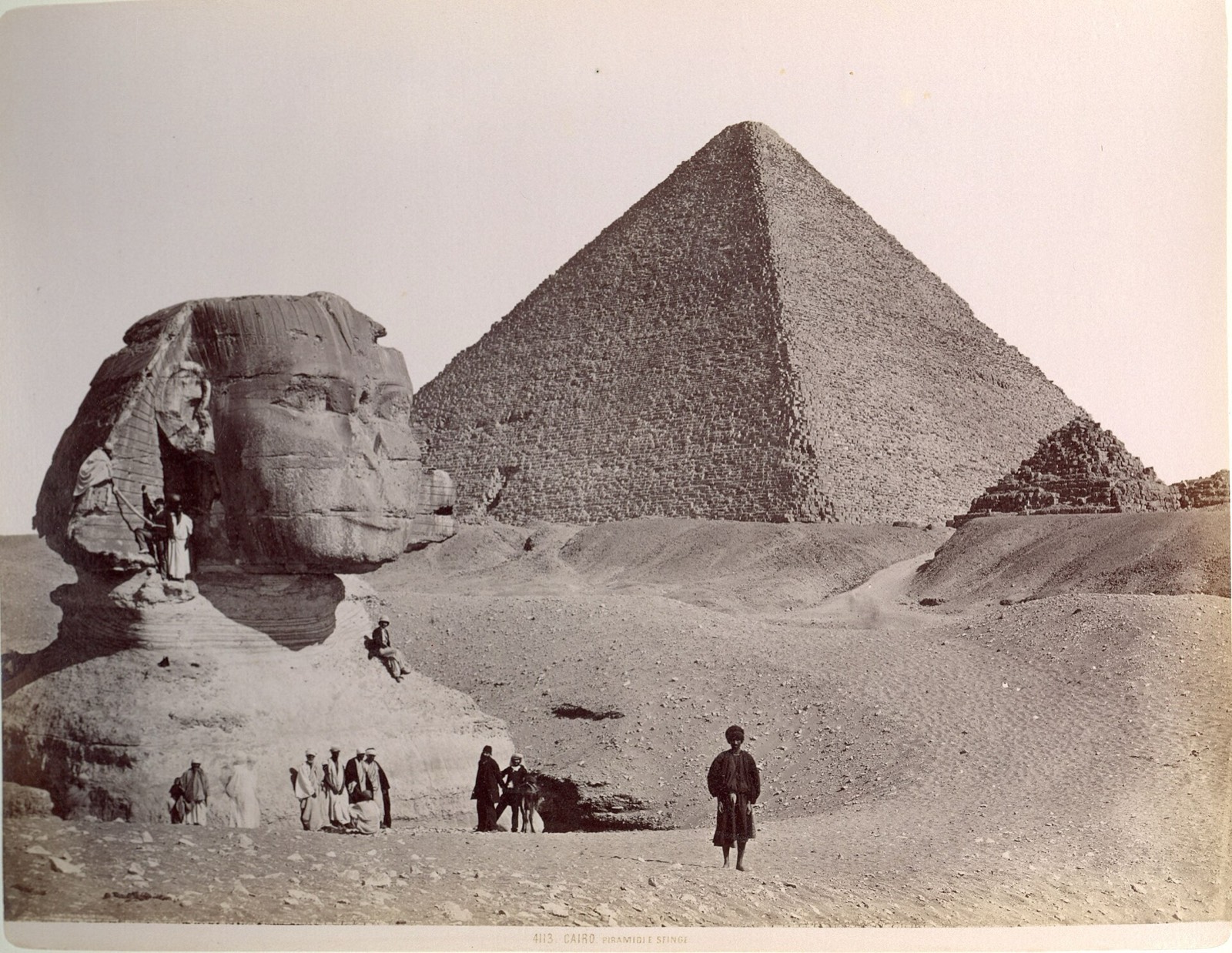
Khafre’s valley temple is the best preserved building of its kind anywhere. It survived because it was buried in sand for most of recorded history — the same sand that was covering the Sphinx a few metres away.
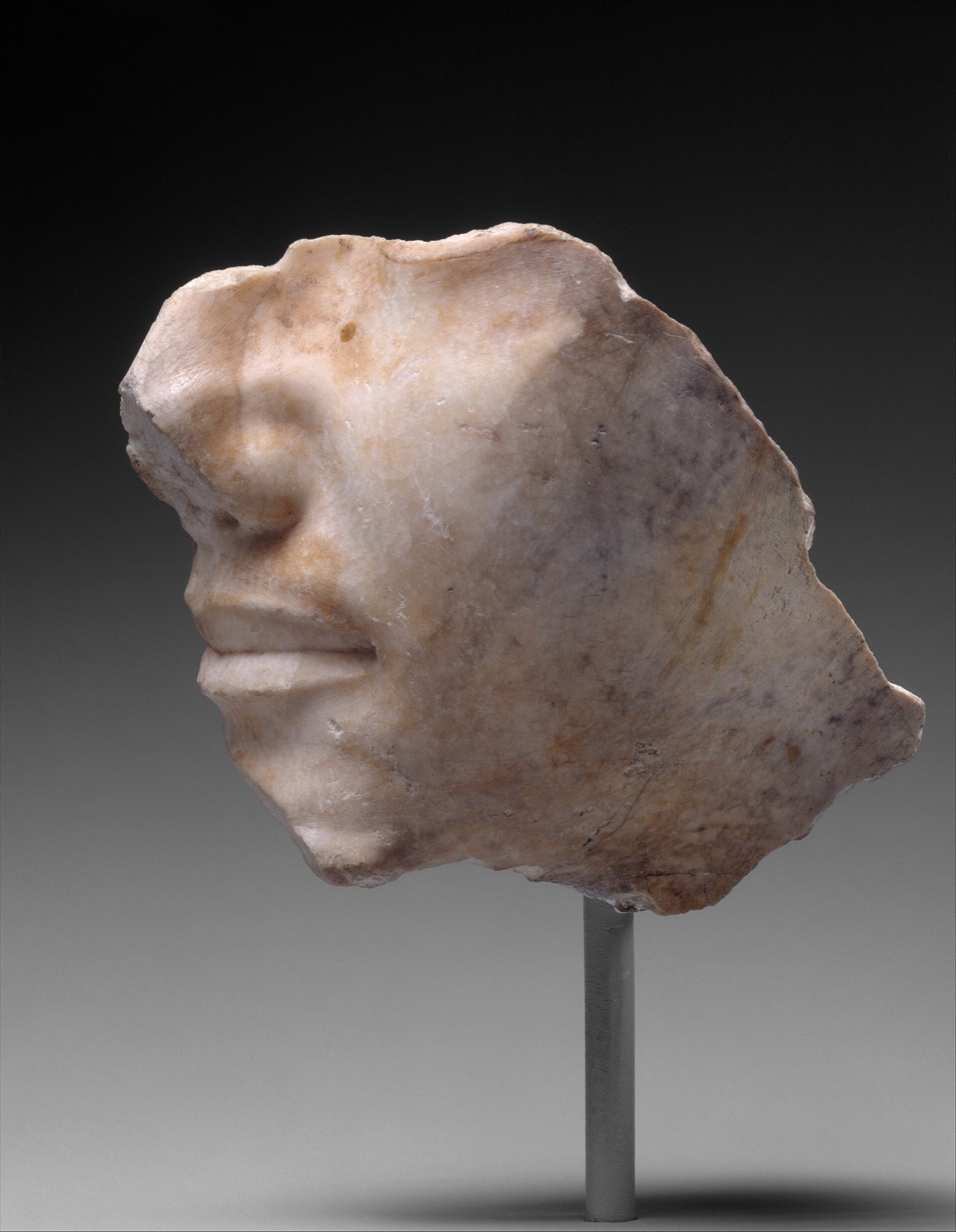
It is built of enormous limestone core blocks faced entirely in polished red granite from Aswan, with a floor of white alabaster. There is no decoration at all: no relief, no painting, no inscription on the walls. The effect is austere in a way that Egyptian architecture very rarely is. Twenty-three seated statues of the king once stood in its T-shaped hall, lit by slots cut through the roof.
The causeway from this temple runs up past the north flank of the Sphinx enclosure — which is one of the reasons the Sphinx is usually attributed to Khafre.