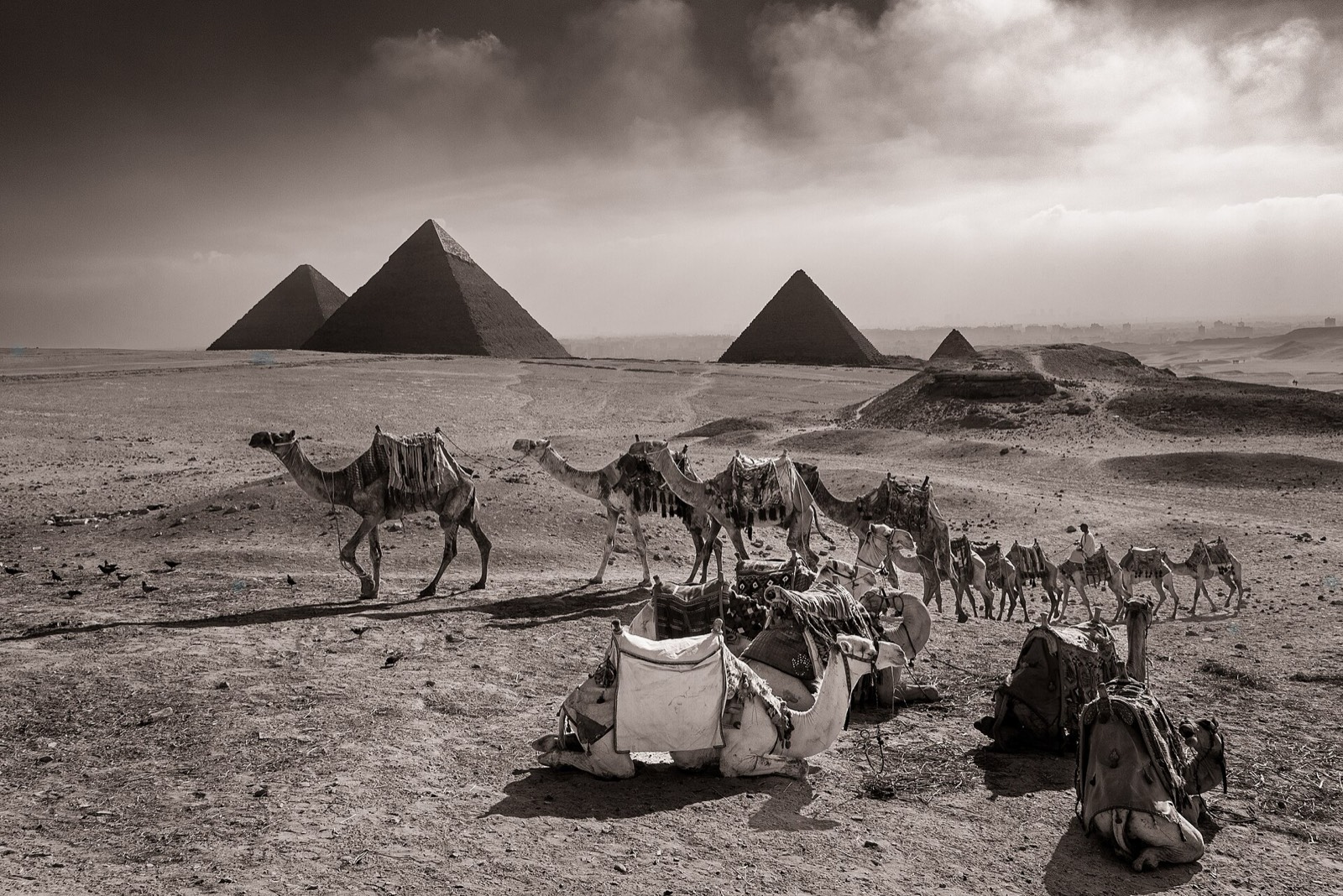
A field guide · Fourth Dynasty · c. 2600–2500 BCE
The Giza Plateau
Three kings, one ridge of limestone, and roughly eighty years of continuous building. What they left behind has outlasted every civilisation that came to look at it.
Giza is not a single monument. It is a working landscape — quarries, harbours, causeways, temples, cemeteries and a town for the people who built it — laid out on a shelf of limestone on the west bank of the Nile, at the edge of the desert.
The plateau was chosen for what was under it. The bedrock here is a hard nummulitic limestone that could carry enormous weight without settling, and it could be quarried on the spot. Most of the stone in the pyramids never travelled more than a few hundred metres. The site also sat close enough to the river that a seasonal harbour could bring in the materials that did have to travel: fine white casing limestone from Tura, across the water, and granite from Aswan, eight hundred kilometres upstream.
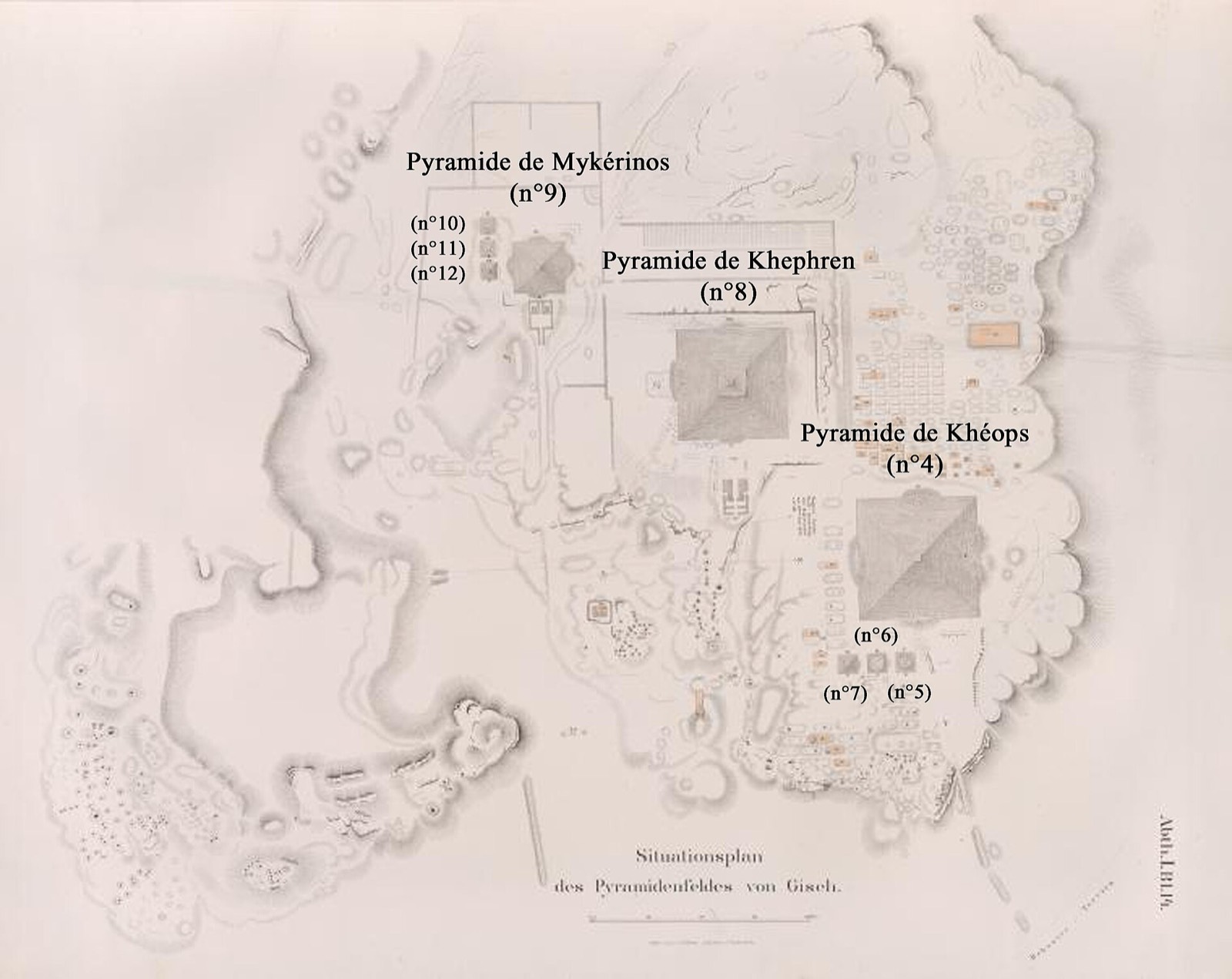
Three kings of the Fourth Dynasty built here in succession — Khufu, his son Khafre, and Khafre’s successor Menkaure. Each built a complete complex: a pyramid, a mortuary temple against its east face, a walled causeway running down the slope, and a valley temple at the harbour. Around them spread the ordered grid of mastaba tombs where the court was buried, arranged in streets like a city of the dead.
Everything else that Giza has become — a wonder of the ancient world, a puzzle, a backdrop — was added by people who arrived later and found it already old.
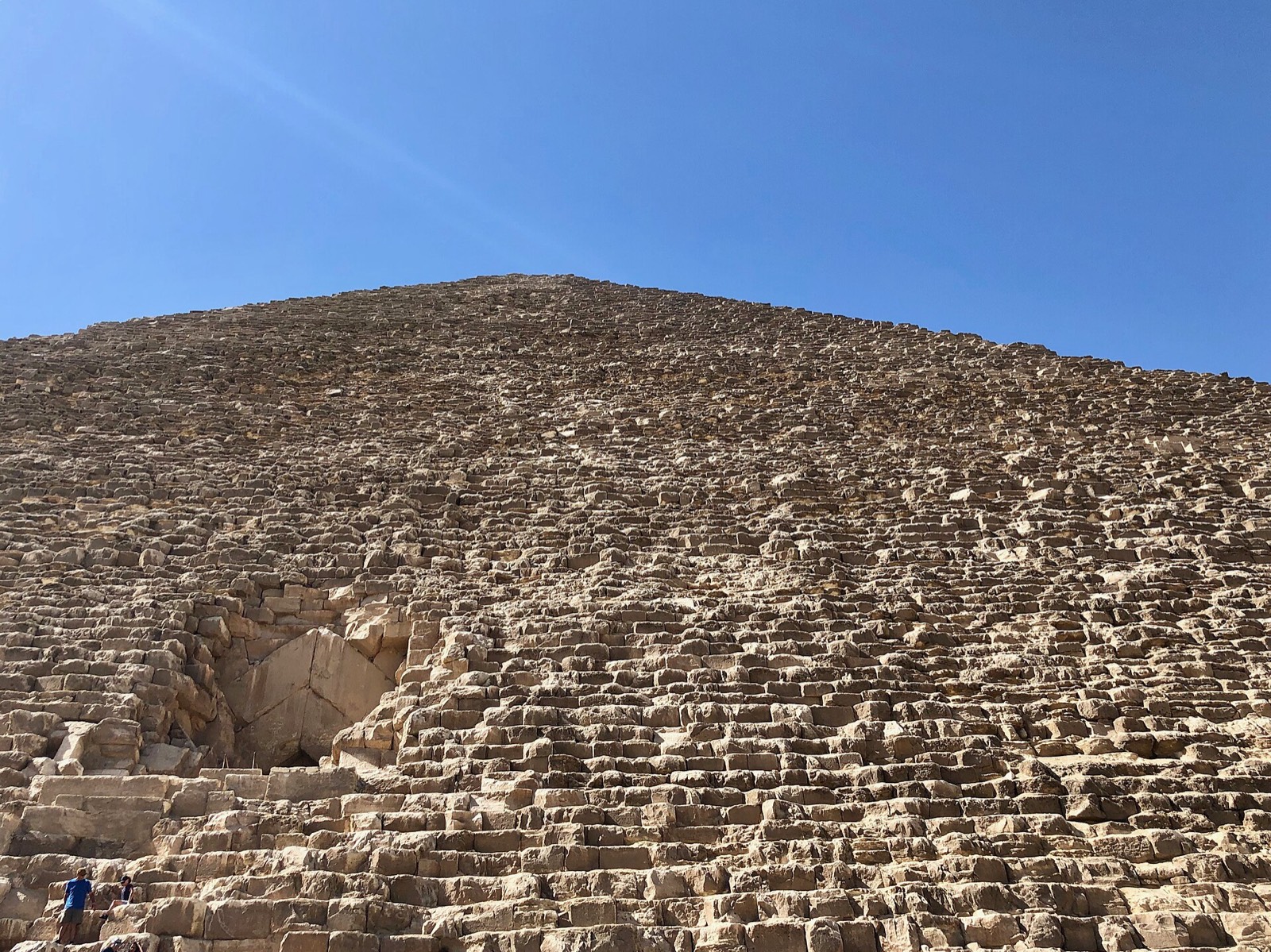
About 138.5 m today, with the capstone and casing gone.
Averaging roughly 2.5 tonnes apiece.
Three complete complexes, built in succession.
Until Lincoln Cathedral's spire, around 1311 CE.
The Great Pyramid
Khufu's tomb held the record for the tallest structure on earth for close to four thousand years.
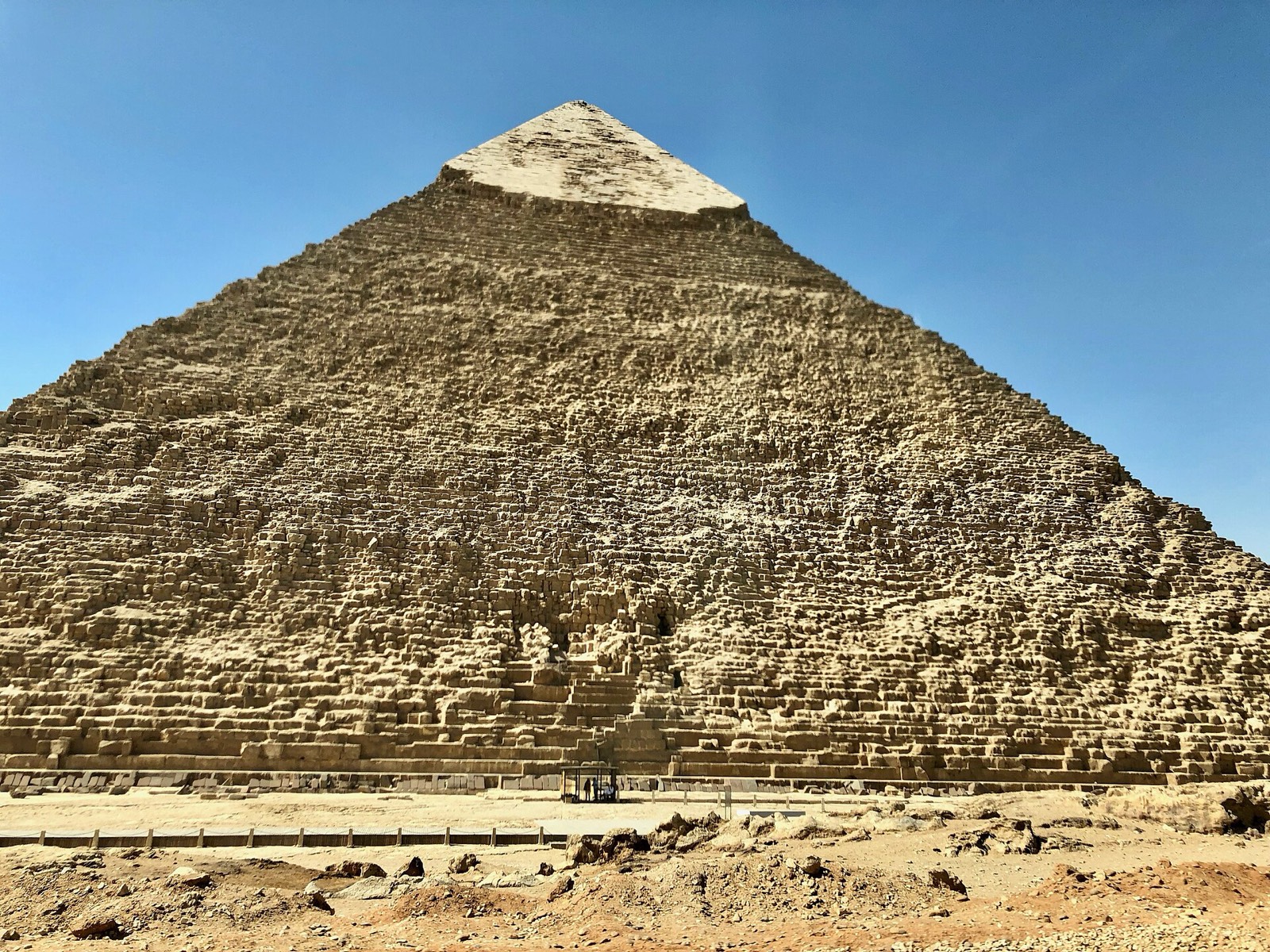
The Pyramid of Khafre
Smaller than its neighbour, built higher up the rock, and still wearing a cap of its original casing.
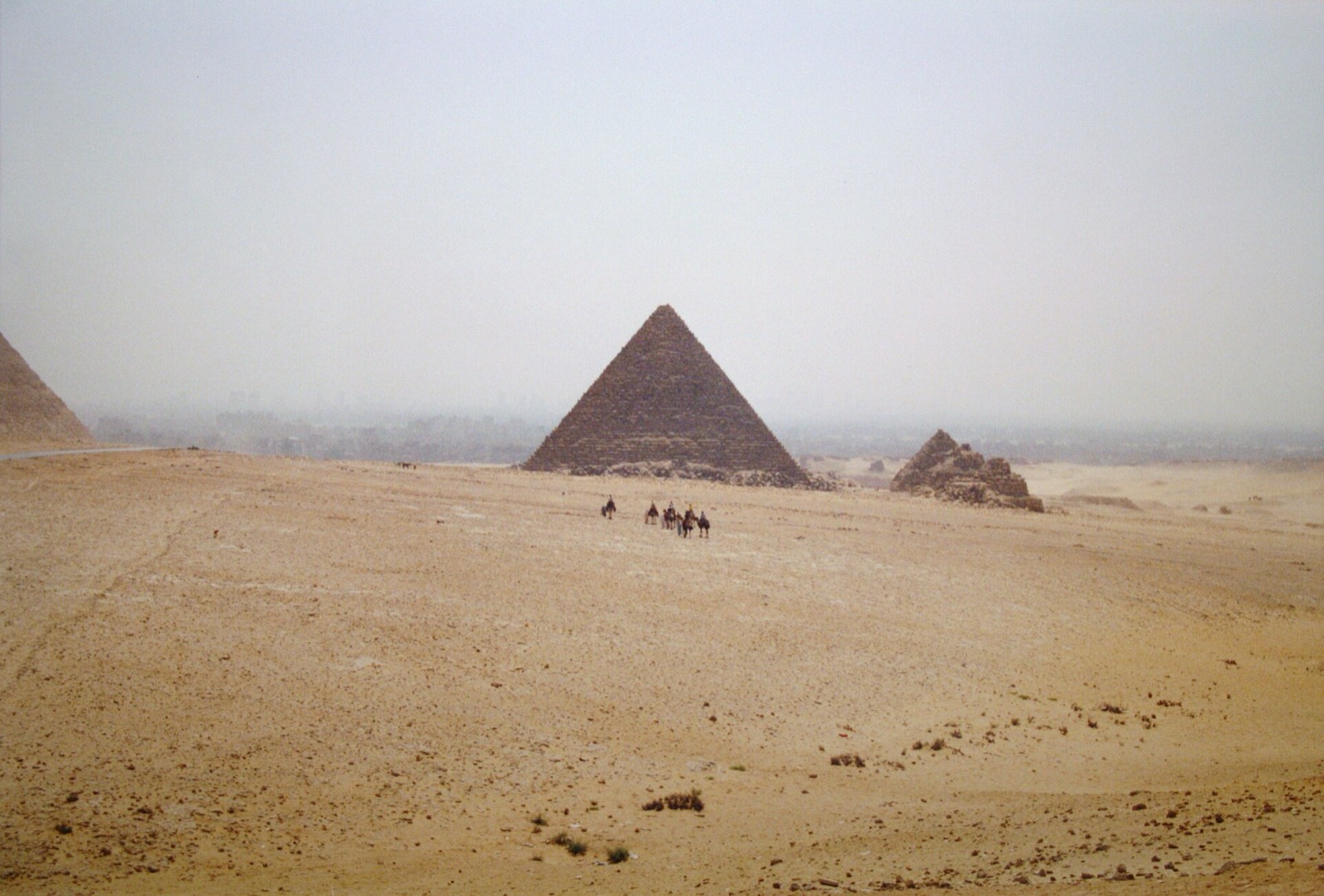
The Pyramid of Menkaure
The smallest of the three, sheathed in granite, and left unfinished when its king died.
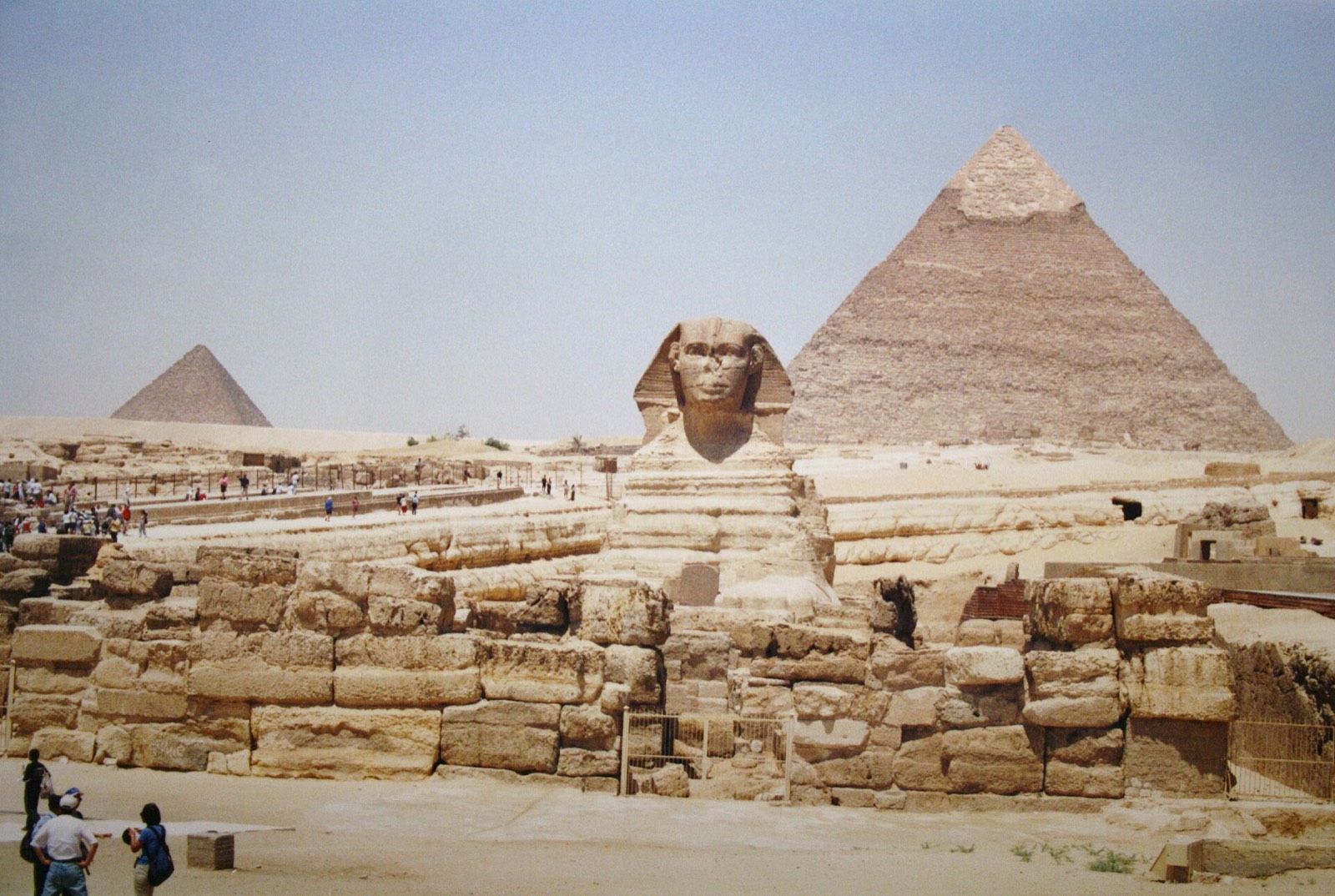
The Great Sphinx
Carved in place from a single ridge of limestone, and buried to the neck for most of its life.
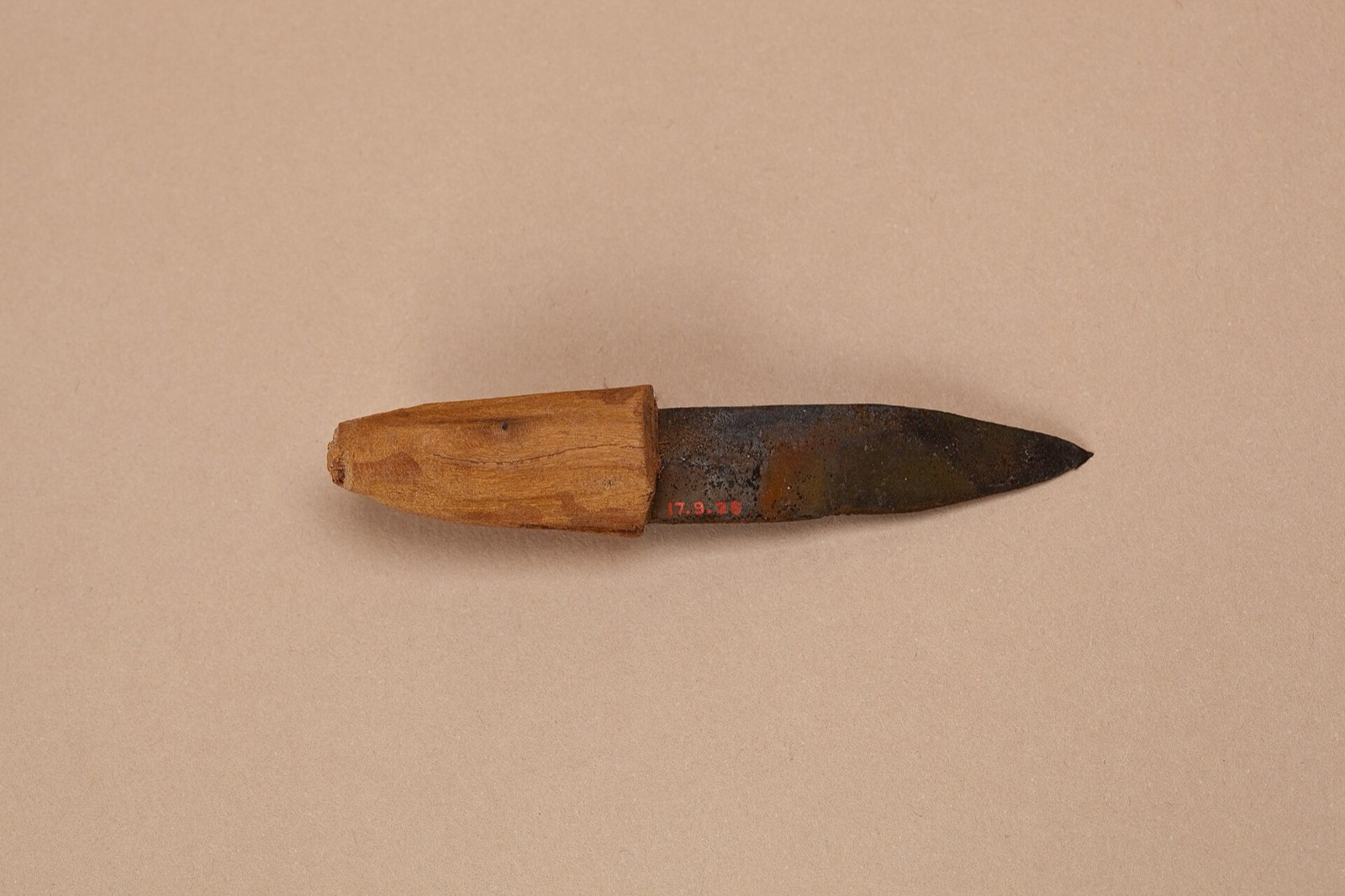
How It Was Built
No wheels, no pulleys, no iron. Copper, rope, ramps, water and an enormous amount of organisation.
A Timeline
From the first mastabas at Saqqara to the surveys, excavations and scans of the present day.
Man fears Time, yet Time fears the Pyramids.
A place that was always being visited
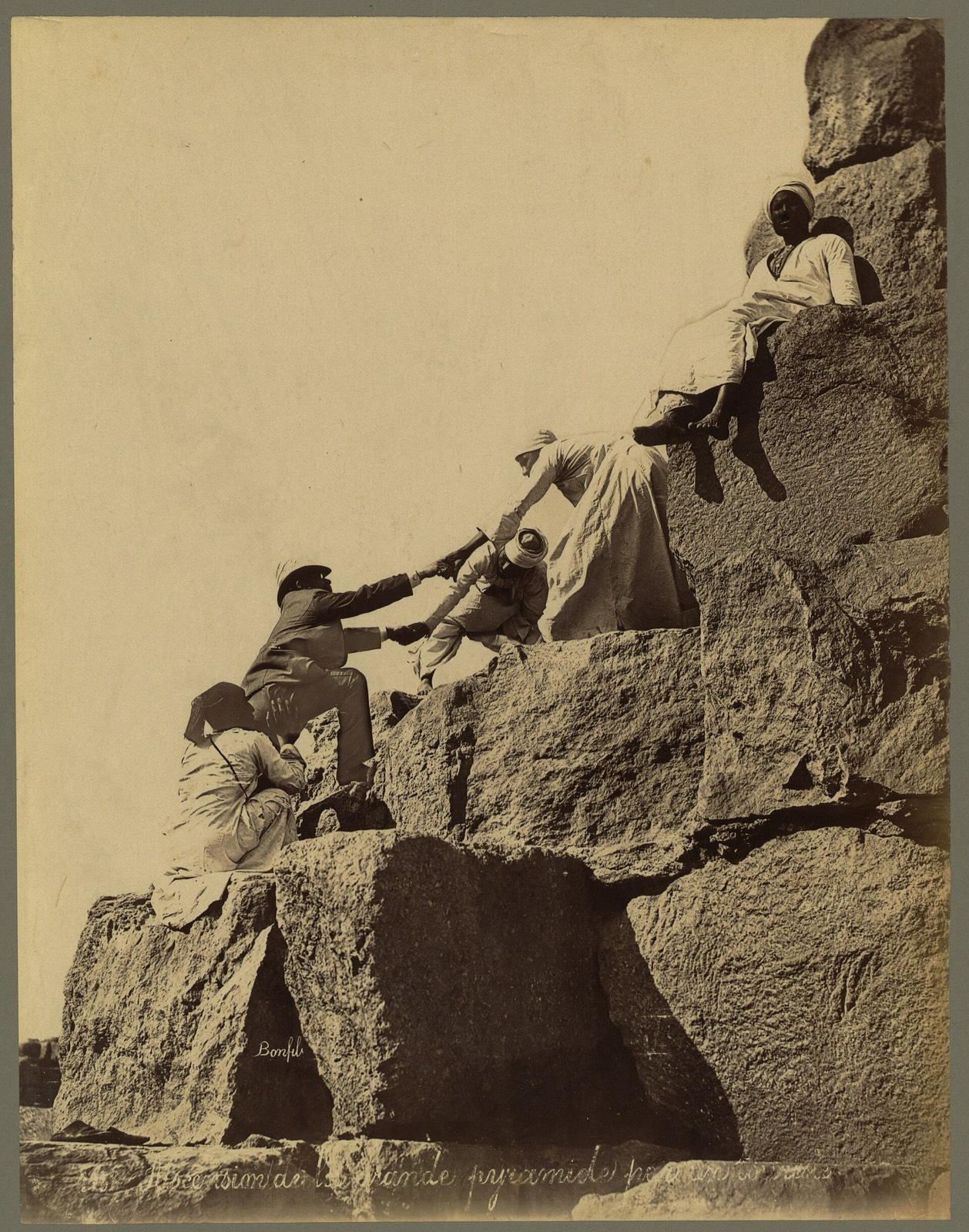
By the time Herodotus arrived in the fifth century BCE, the pyramids were already more than two thousand years old and the local guides were already telling tourists things that were not true. Roman visitors scratched their names into the casing. Medieval Cairo quarried the smooth outer stone for its own walls and mosques after an earthquake in 1303 shook much of it loose.
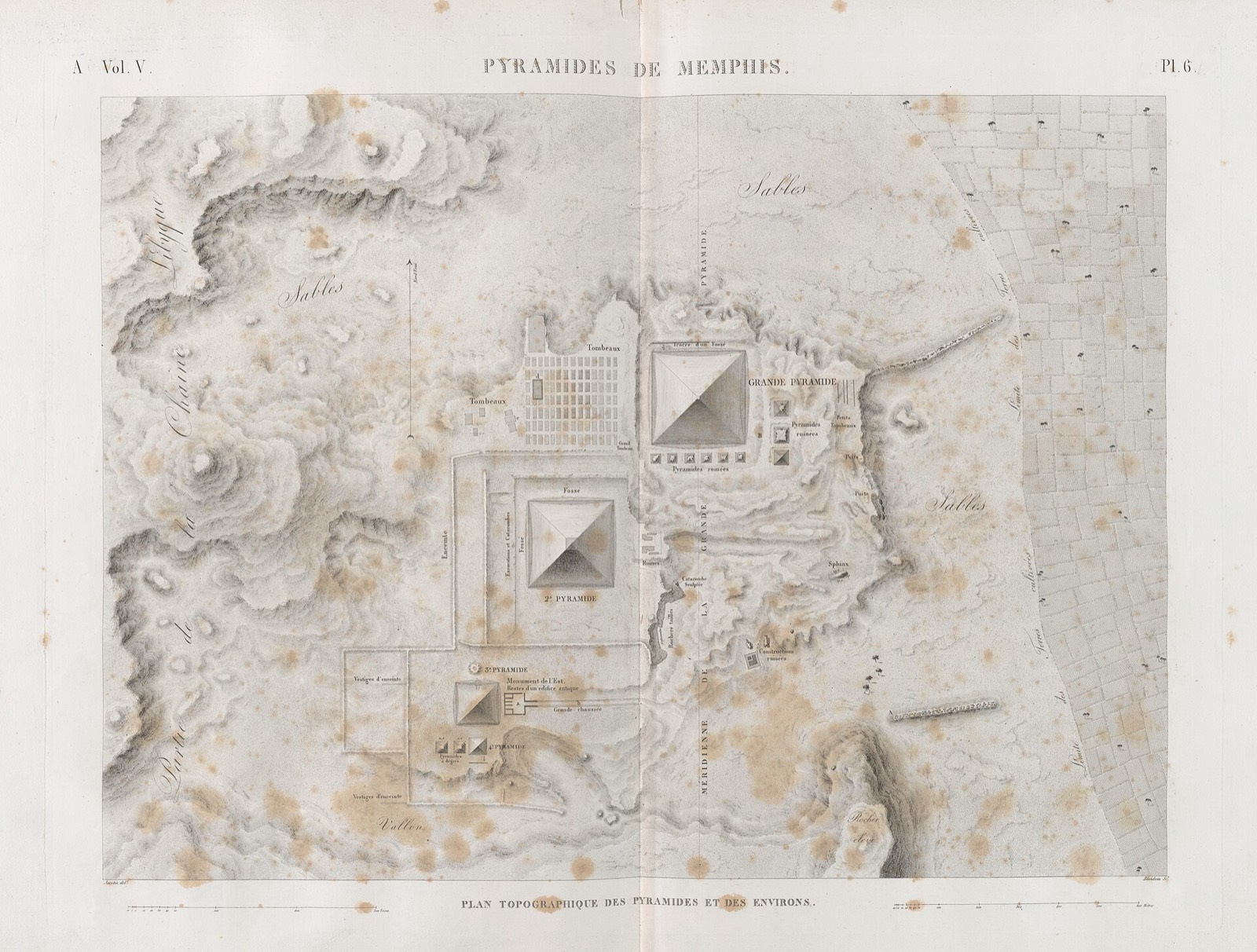
The modern record begins with Napoleon’s expedition of 1798. The scholars who travelled with the army spent three years measuring and drawing, and the enormous Description de l’Égypte that resulted — published in volumes between 1809 and 1829 — is where most of the engraved plates in this guide come from. They were followed by Lepsius in the 1840s, Petrie in the 1880s with instruments accurate to millimetres, and Reisner from 1902 onward, whose excavation of the mastaba fields ran for forty years.
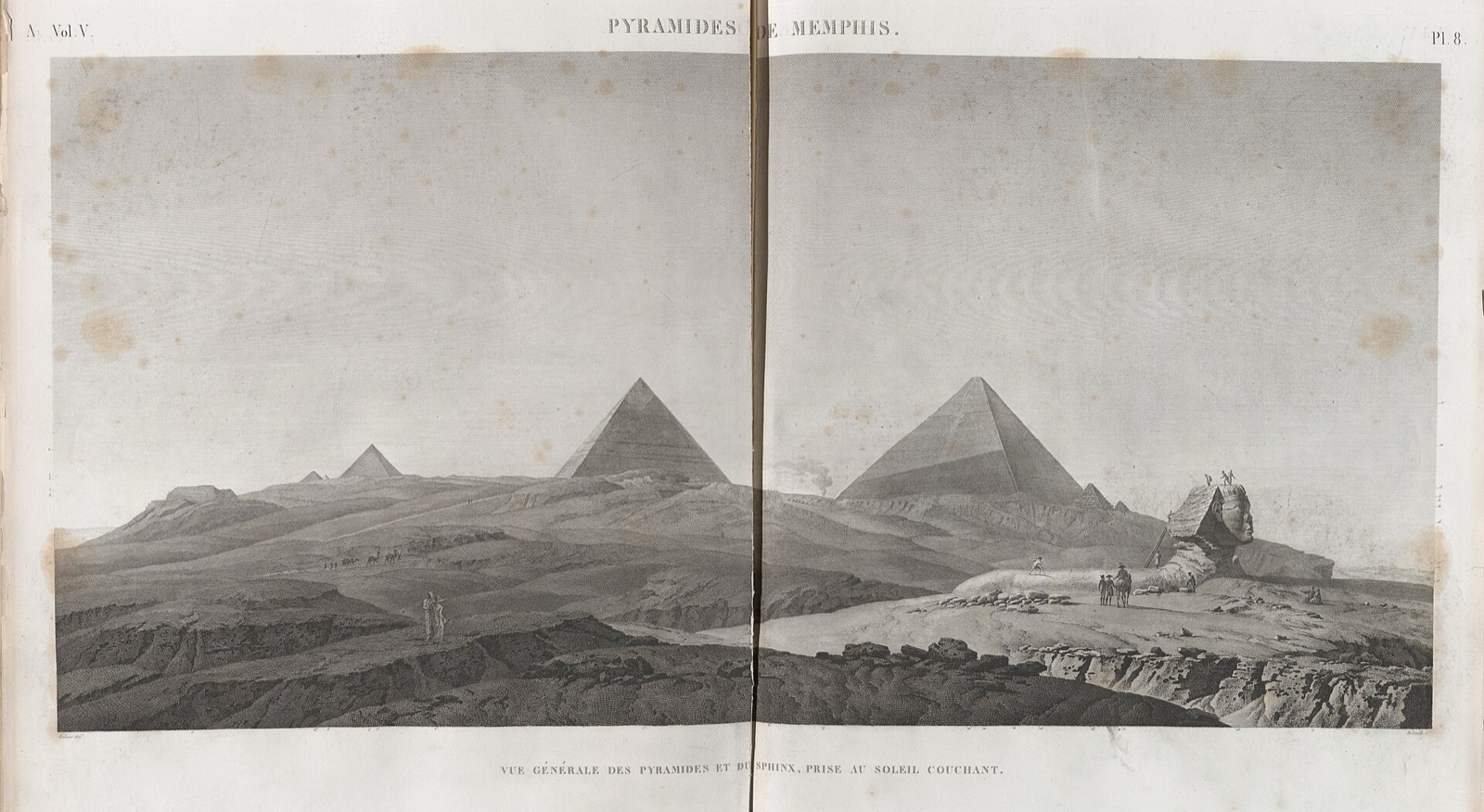
The pyramids and the Sphinx at sunset · Description de l’Égypte · 1809 · Public domain
Why so many old pictures?
Partly because they are free to use. But mostly because the early record shows things that no longer exist: the Sphinx buried to its shoulders, the pyramids before the plateau was fenced and floodlit, the casing stones still lying where they fell.
The engravers of the Description also had a habit of drawing what they thought ought to be there. Their plates are beautiful and only partly reliable — which is its own kind of historical evidence.