Section —
Credits & Licences
Every illustration in this guide is free of copyright restriction — either released under CC0 or in the public domain by age. Each row links to the source record.
Engravings, albumen prints, museum objects and modern photographs.
Out of copyright by age — mostly 1809 to 1890.
Rights actively waived by the holding institution or photographer.
All images pre-resized to 1600px and recompressed.
| Plate | Description | Author | Date | Licence | Source |
|---|---|---|---|---|---|
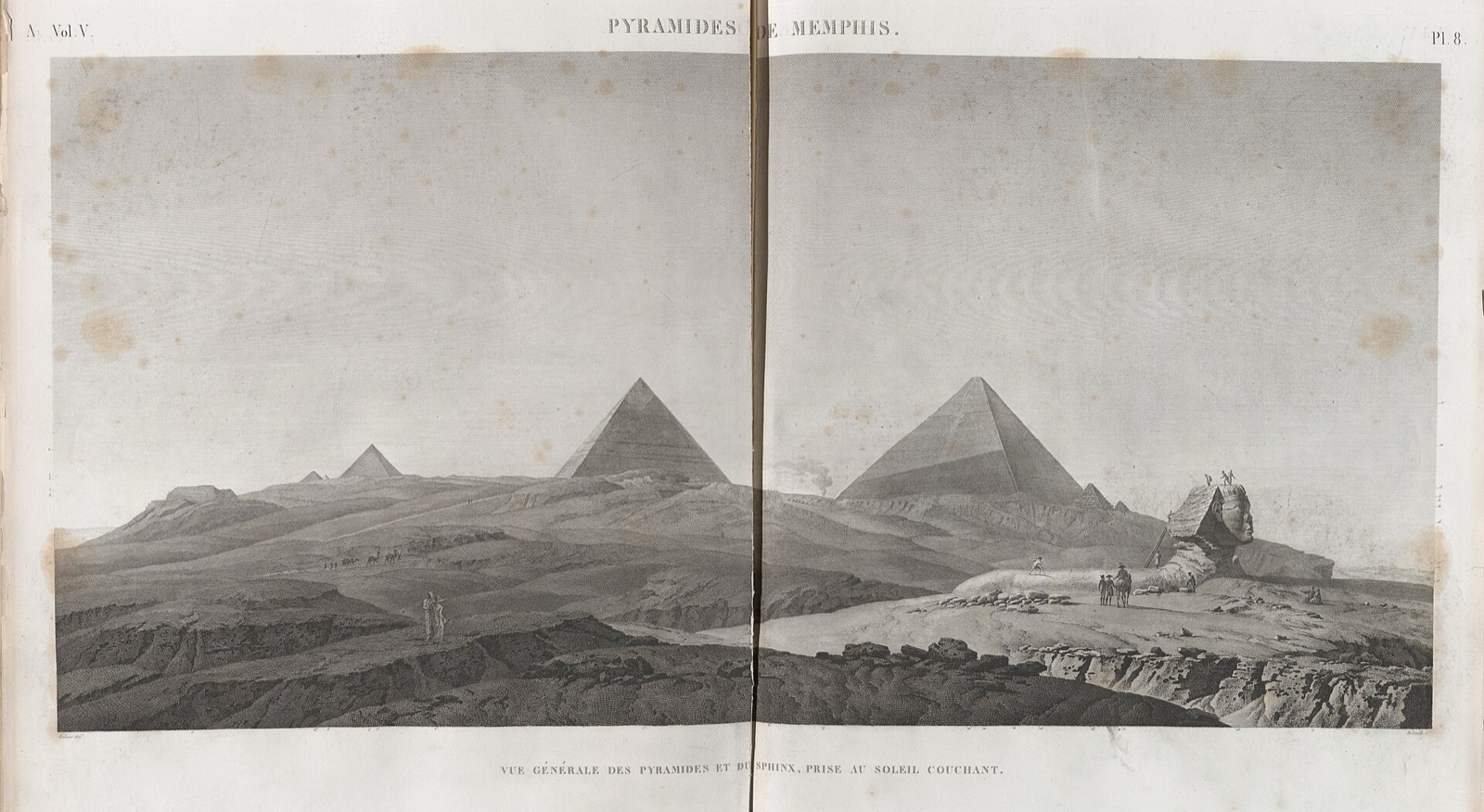 | The pyramids and the Sphinx at sunset, seen from the south-east | Description de l'Égypte | 1809 | Public domain | Commons ↗ |
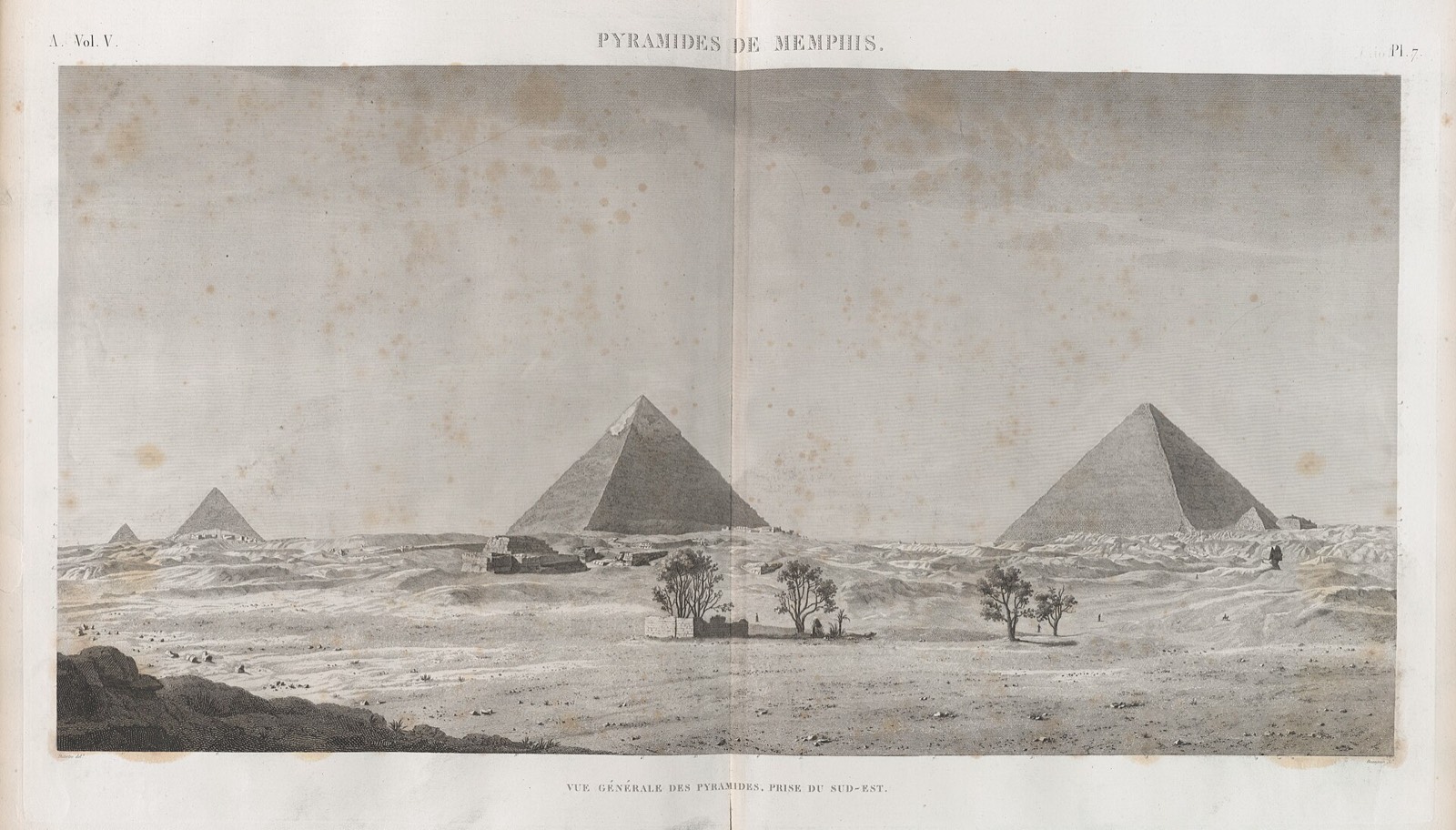 | General view of the Giza pyramids from the south-east | Description de l'Égypte | 1809 | Public domain | Commons ↗ |
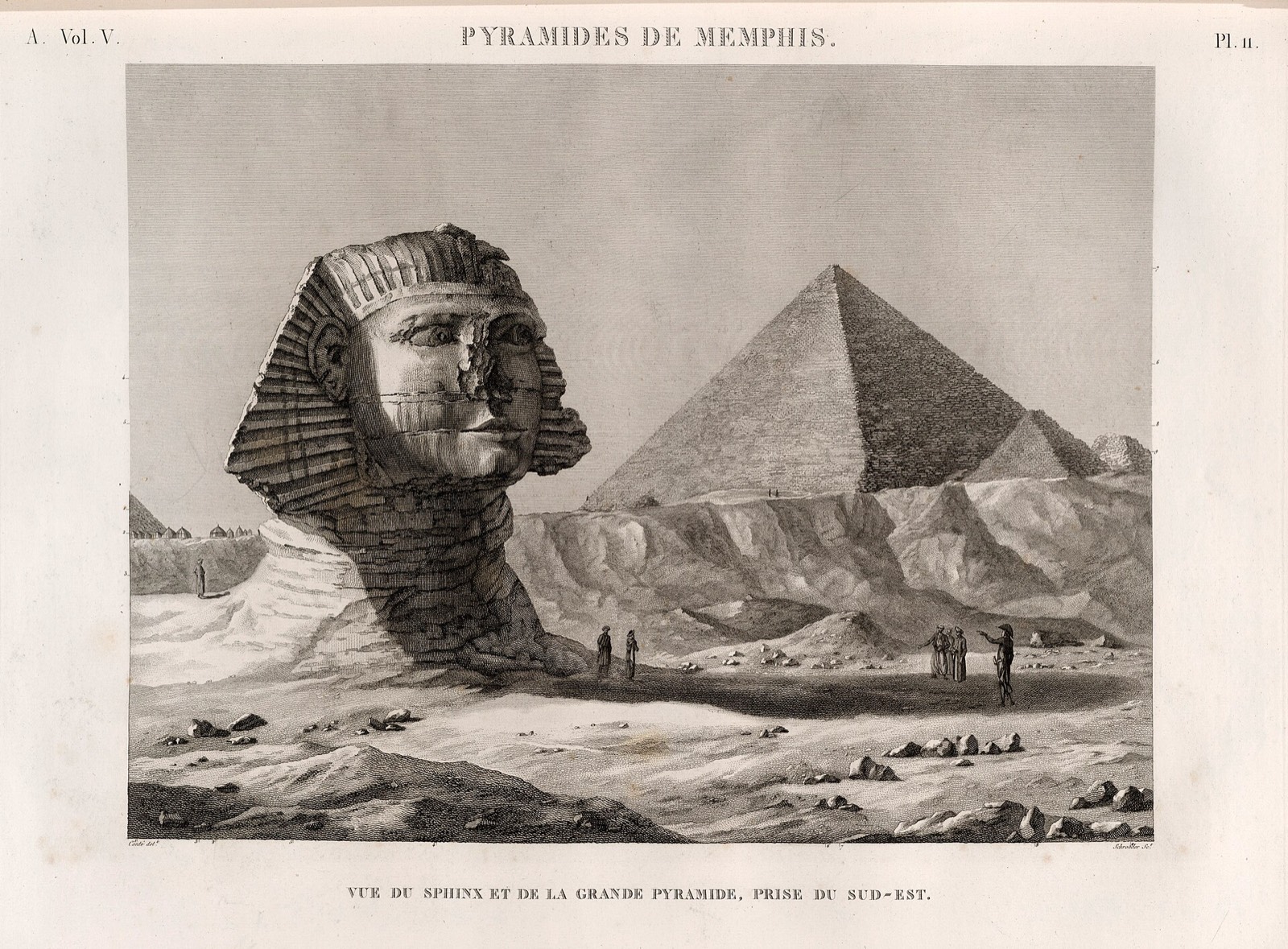 | The Sphinx and the Great Pyramid from the south-east | Description de l'Égypte | 1809 | Public domain | Commons ↗ |
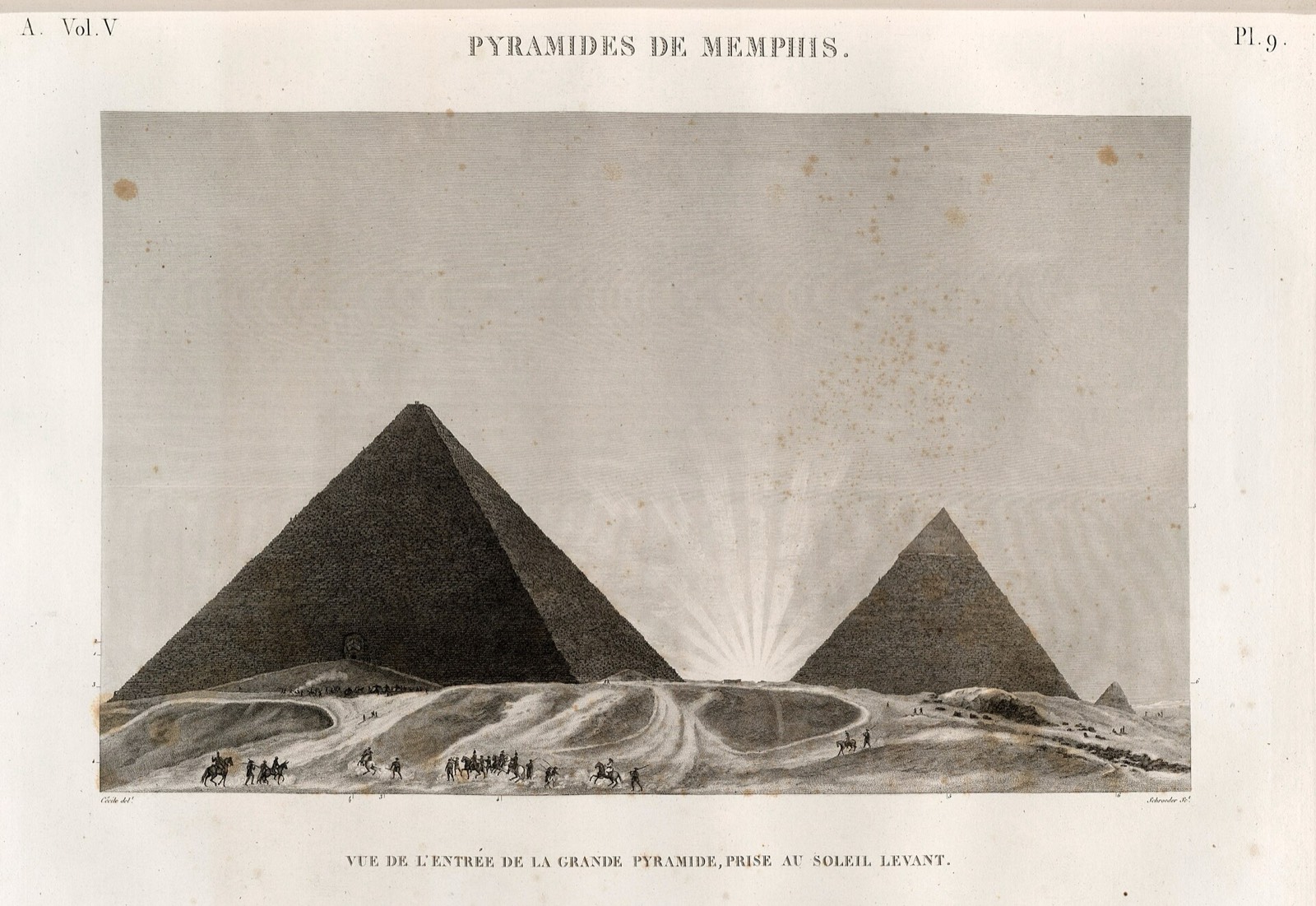 | The entrance to the Great Pyramid at sunrise | Description de l'Égypte | 1809 | Public domain | Commons ↗ |
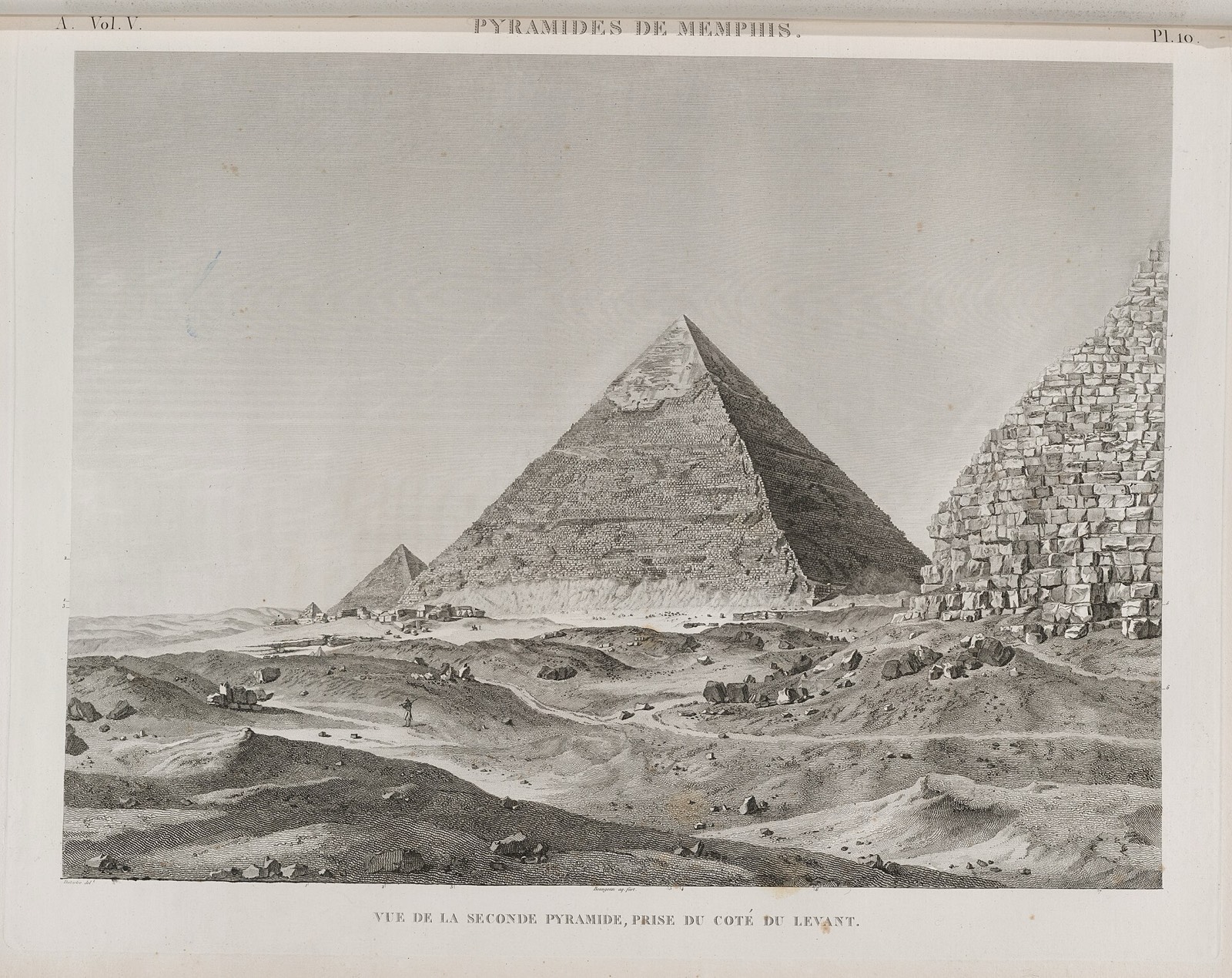 | The second pyramid seen from the east | Description de l'Égypte | 1809 | Public domain | Commons ↗ |
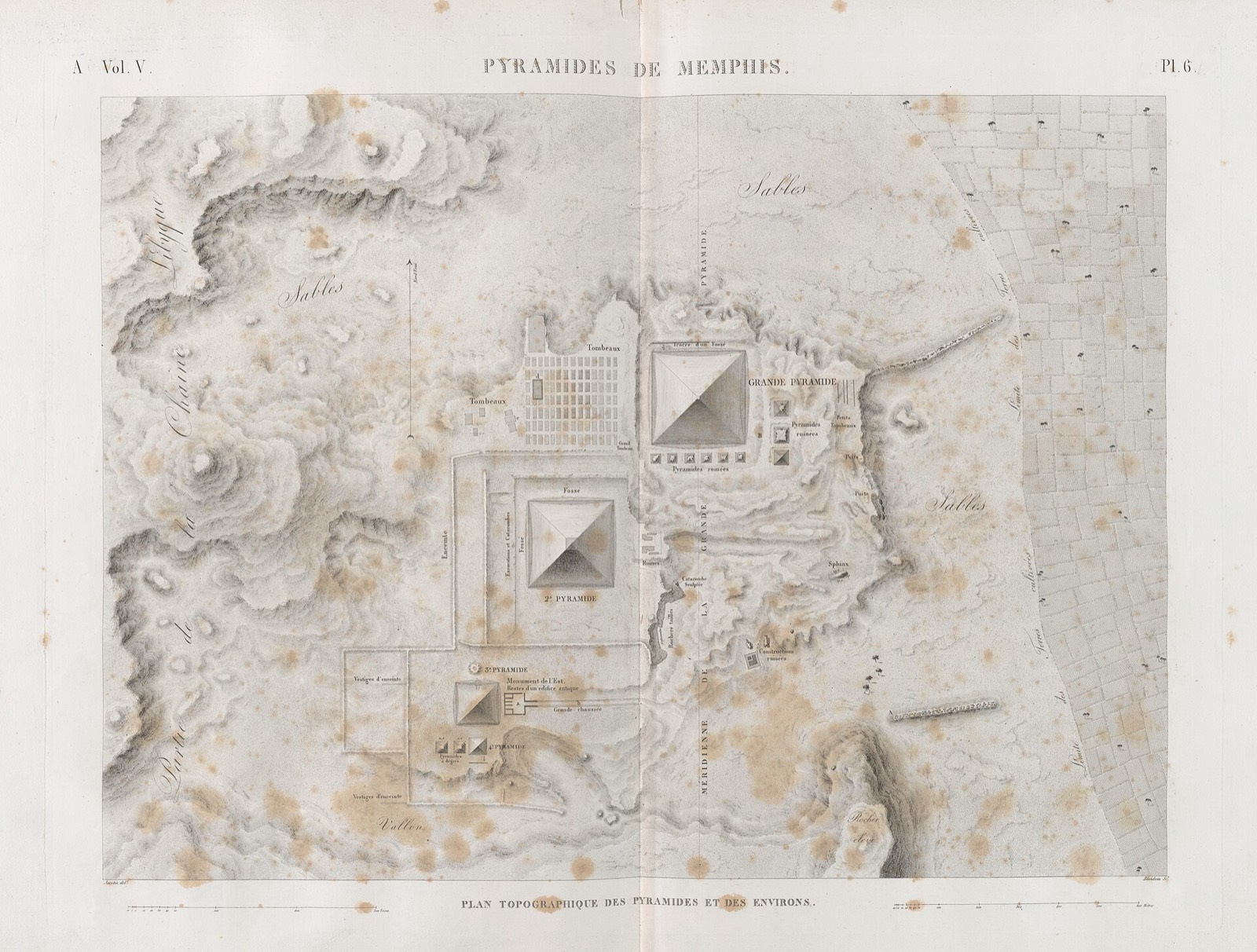 | Topographic plan of the pyramids and their surroundings | Description de l'Égypte | 1809 | Public domain | Commons ↗ |
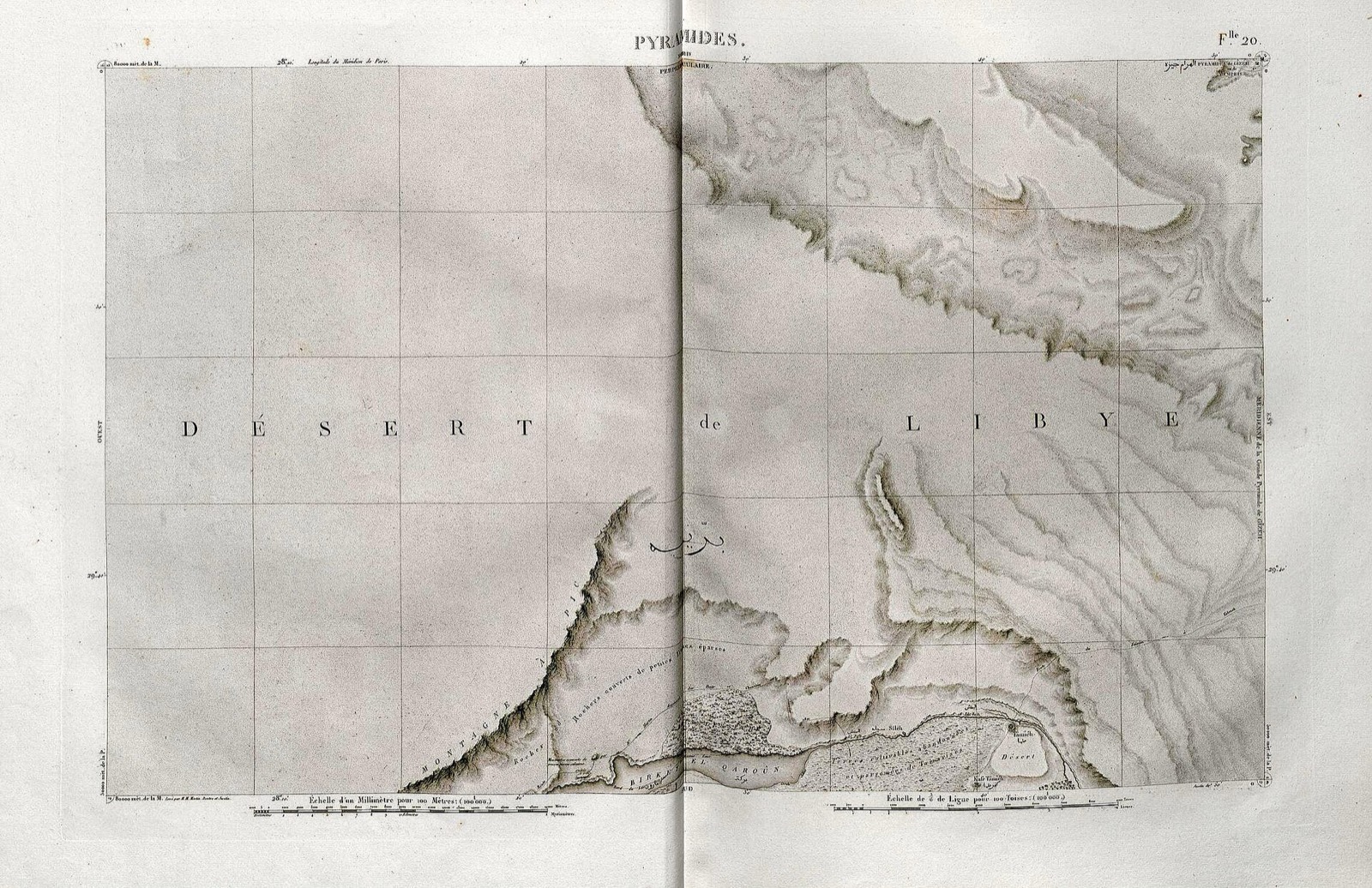 | Atlas sheet showing the pyramid fields | Antoine Jacotin | c. 1800 | Public domain | Commons ↗ |
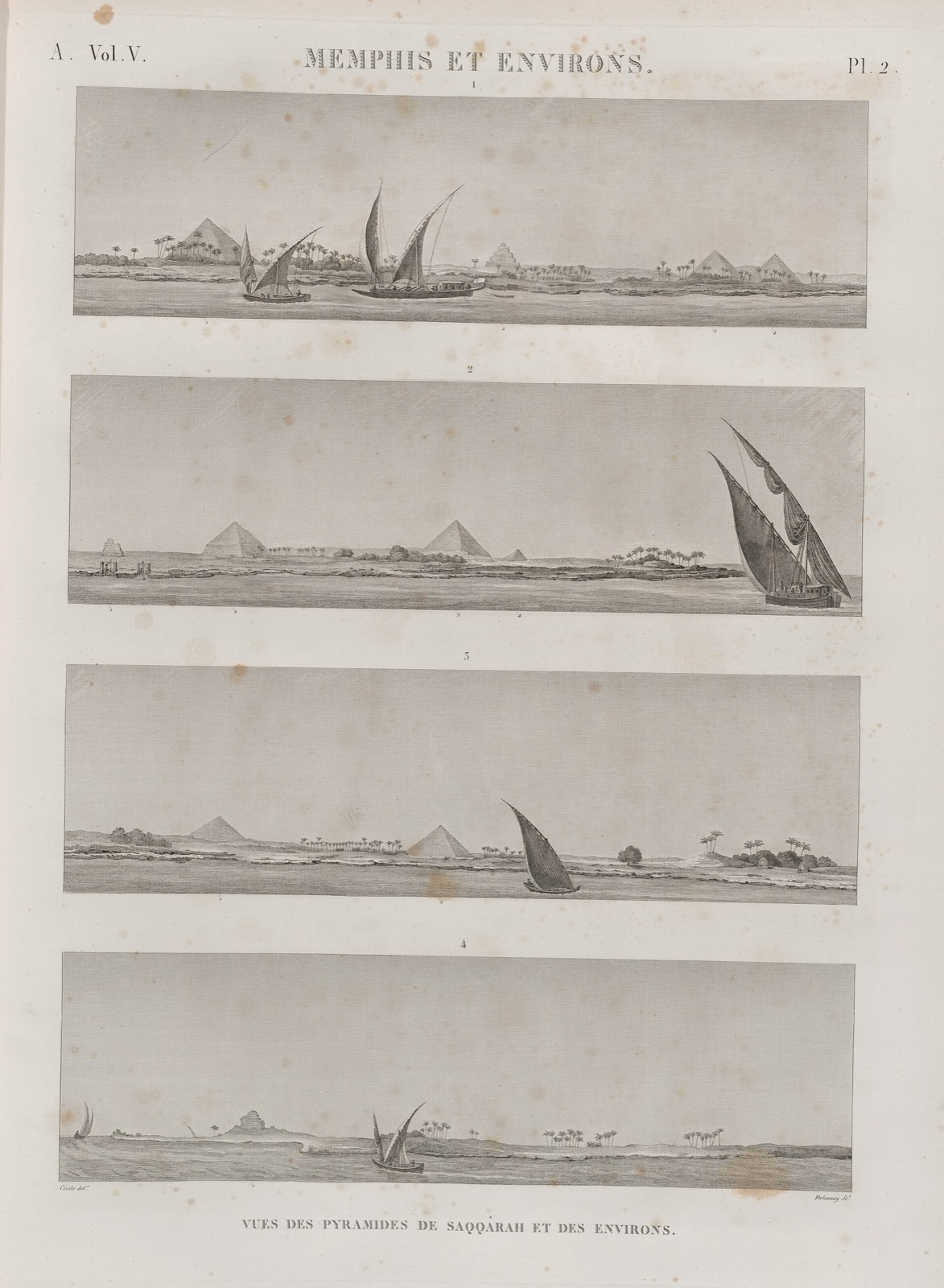 | The Saqqara pyramids and surrounding desert | Description de l'Égypte | 1809 | Public domain | Commons ↗ |
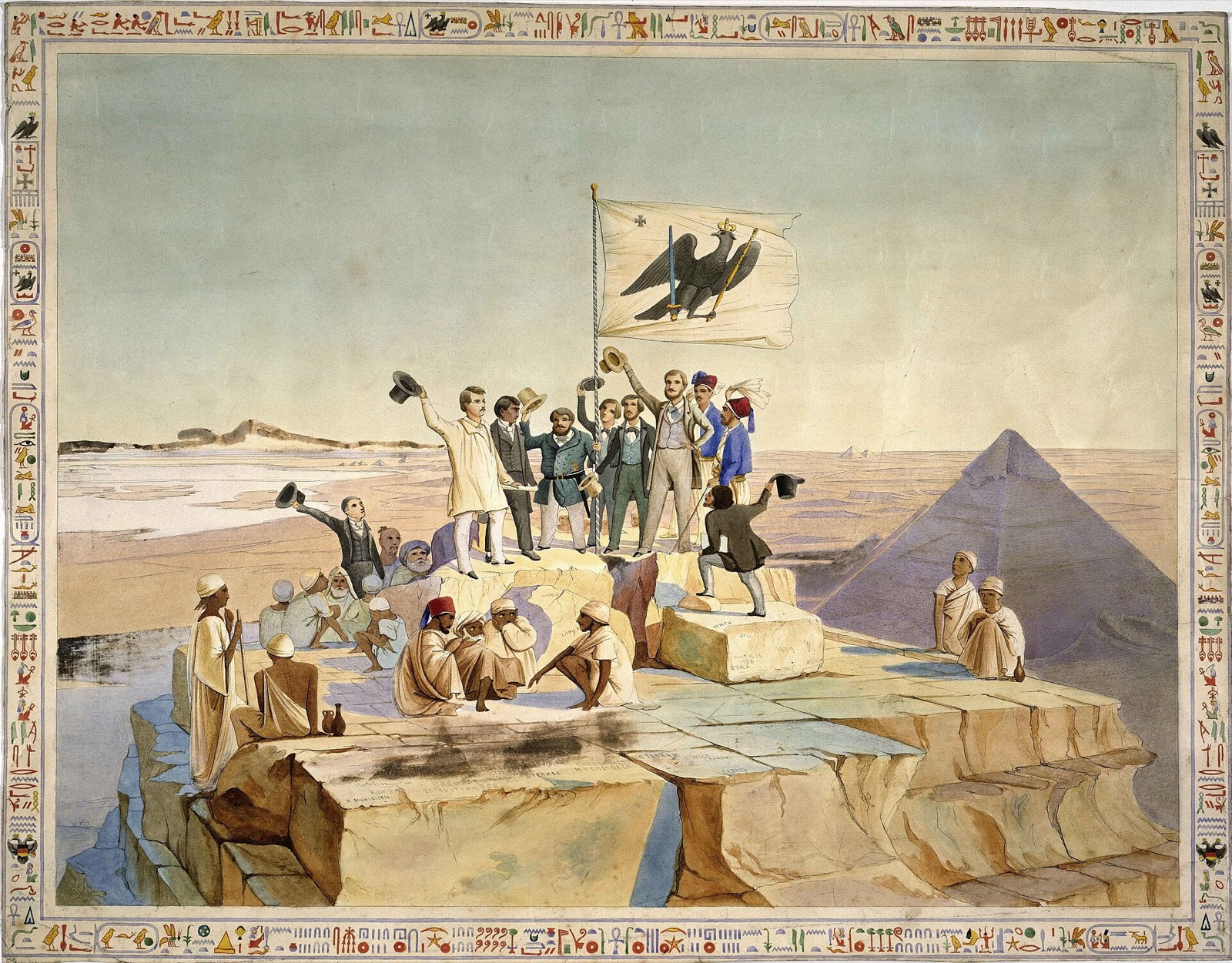 | The Great Pyramid recorded by the Lepsius expedition | Johann Jakob Frey, Lepsius expedition | 1842–1845 | Public domain | Commons ↗ |
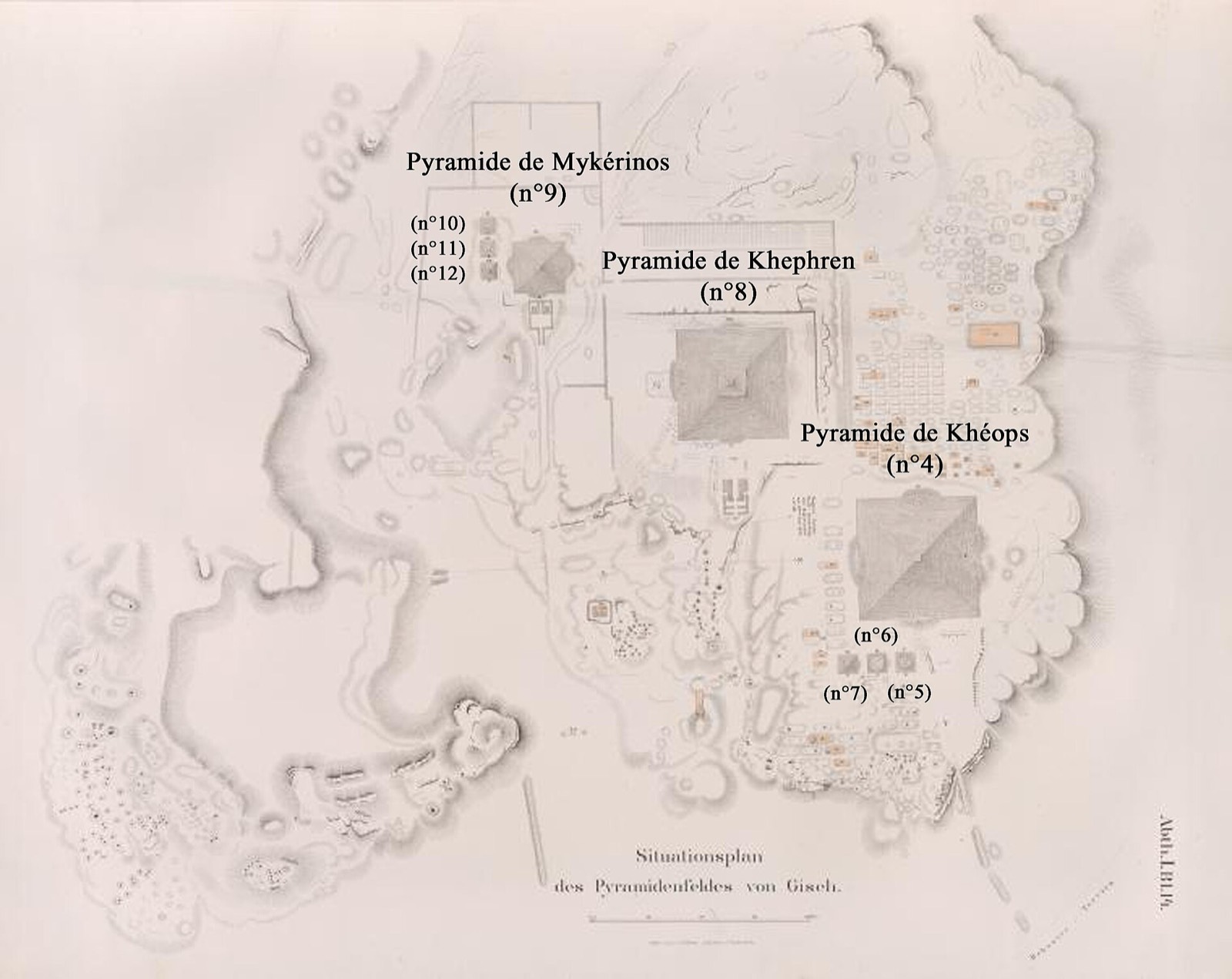 | Lepsius's survey map of the Giza necropolis | Karl Richard Lepsius | 1842 | Public domain | Commons ↗ |
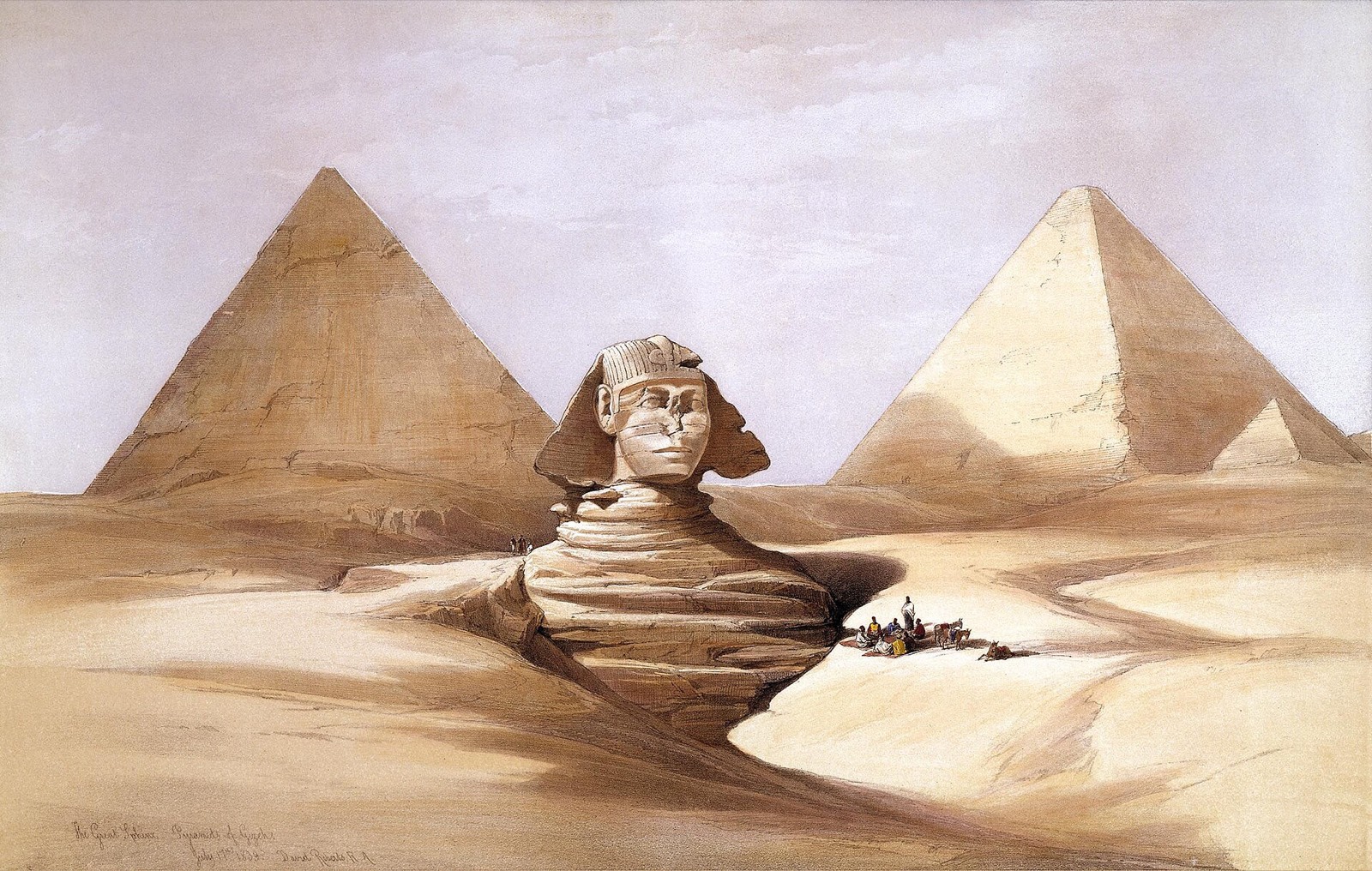 | The Great Sphinx, drawn by David Roberts | David Roberts | 1838 | Public domain | Commons ↗ |
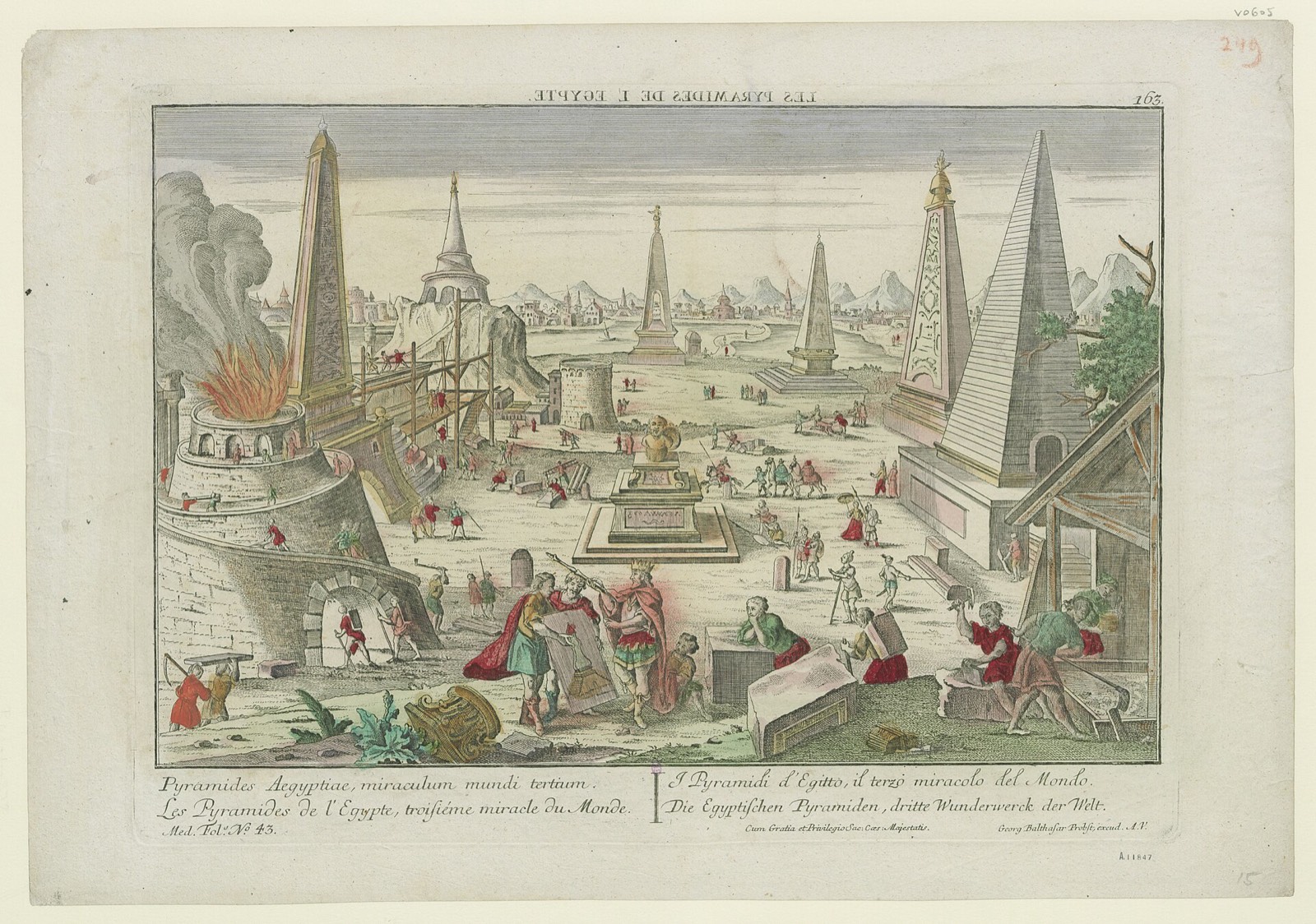 | An engraver's imagined Giza, printed in Europe | Unknown | 1770 | Public domain | Commons ↗ |
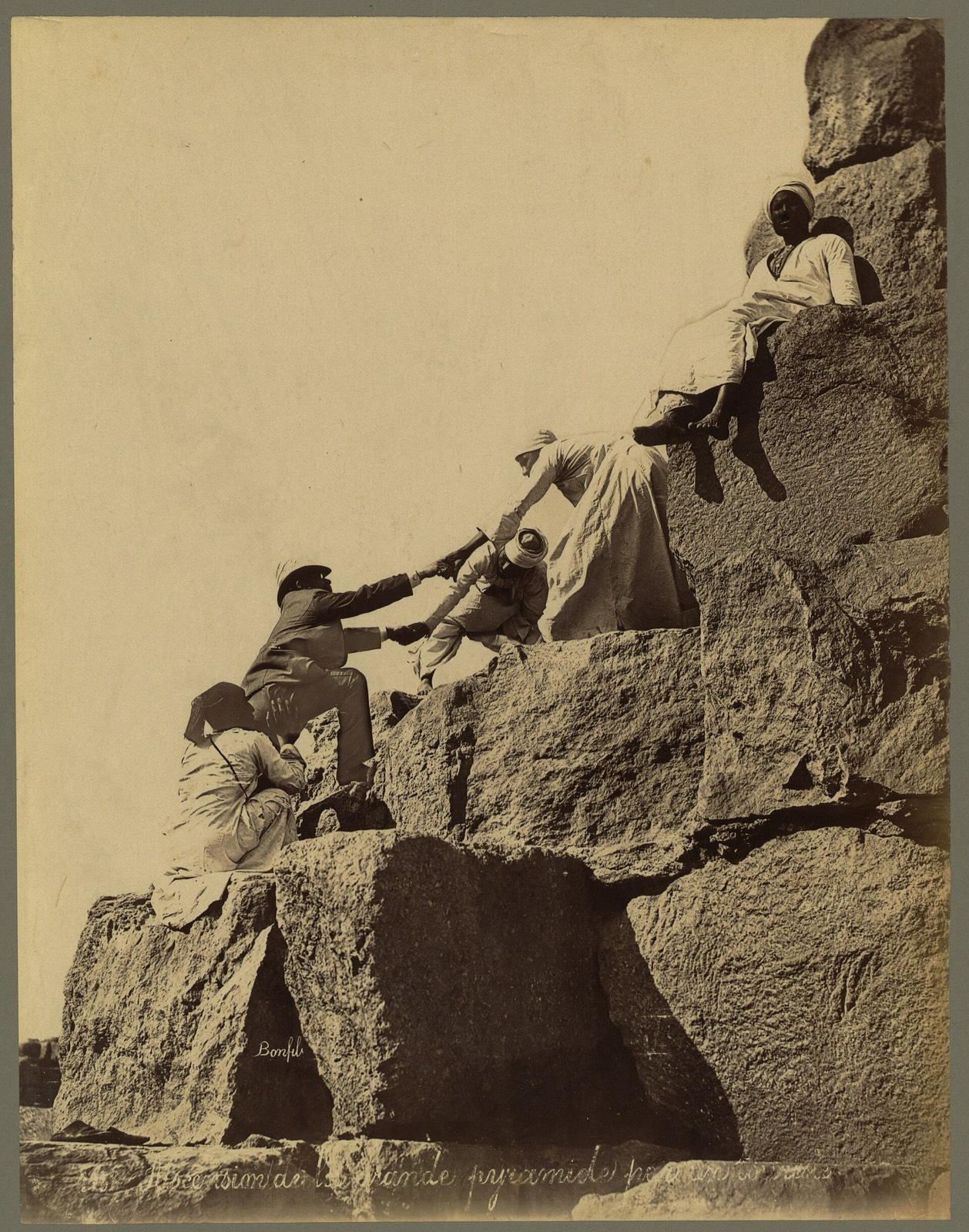 | A visitor being hauled up the Great Pyramid | Maison Bonfils | 1867 | Public domain | Commons ↗ |
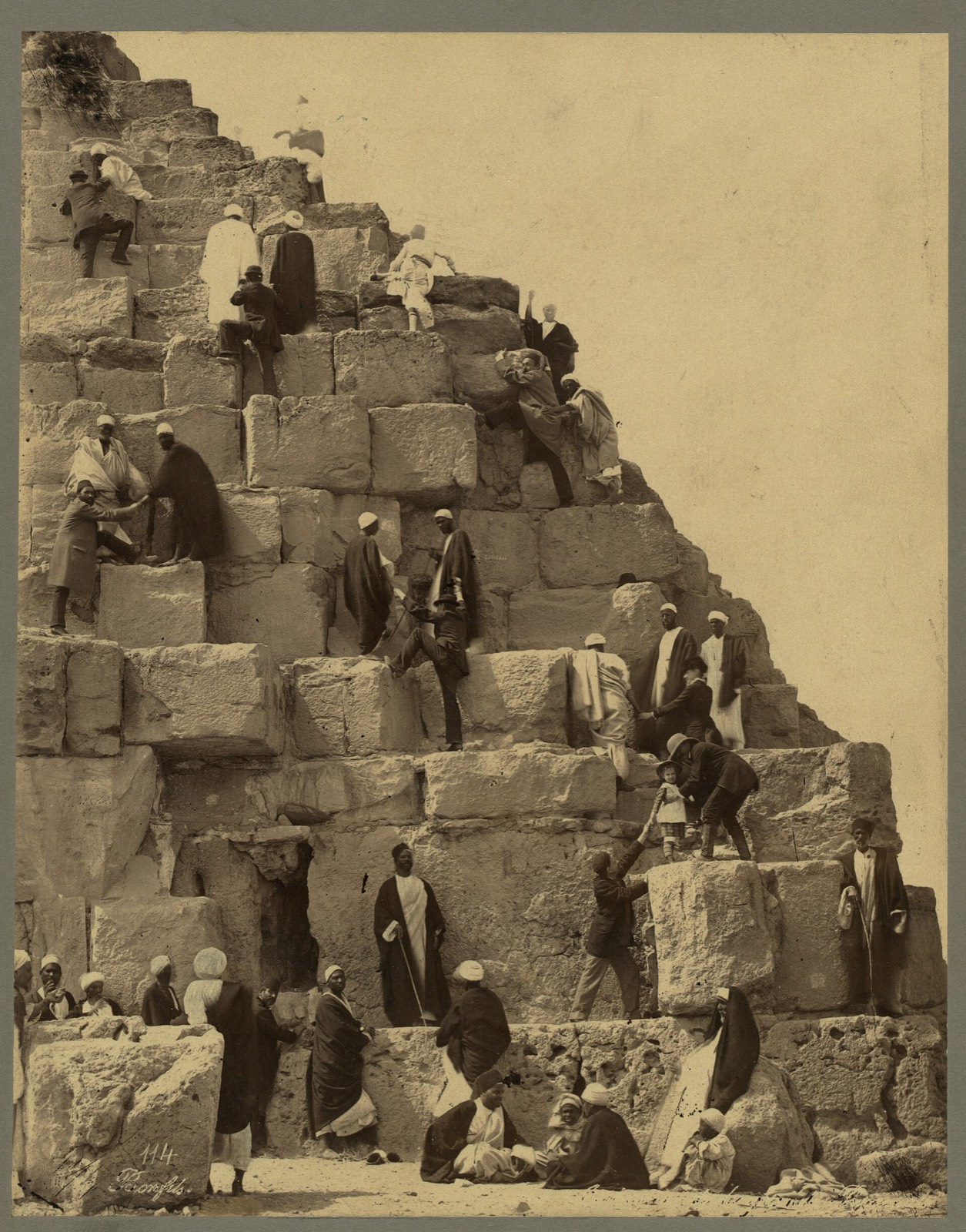 | Visitors at the base of the Great Pyramid | Maison Bonfils | 1867 | Public domain | Commons ↗ |
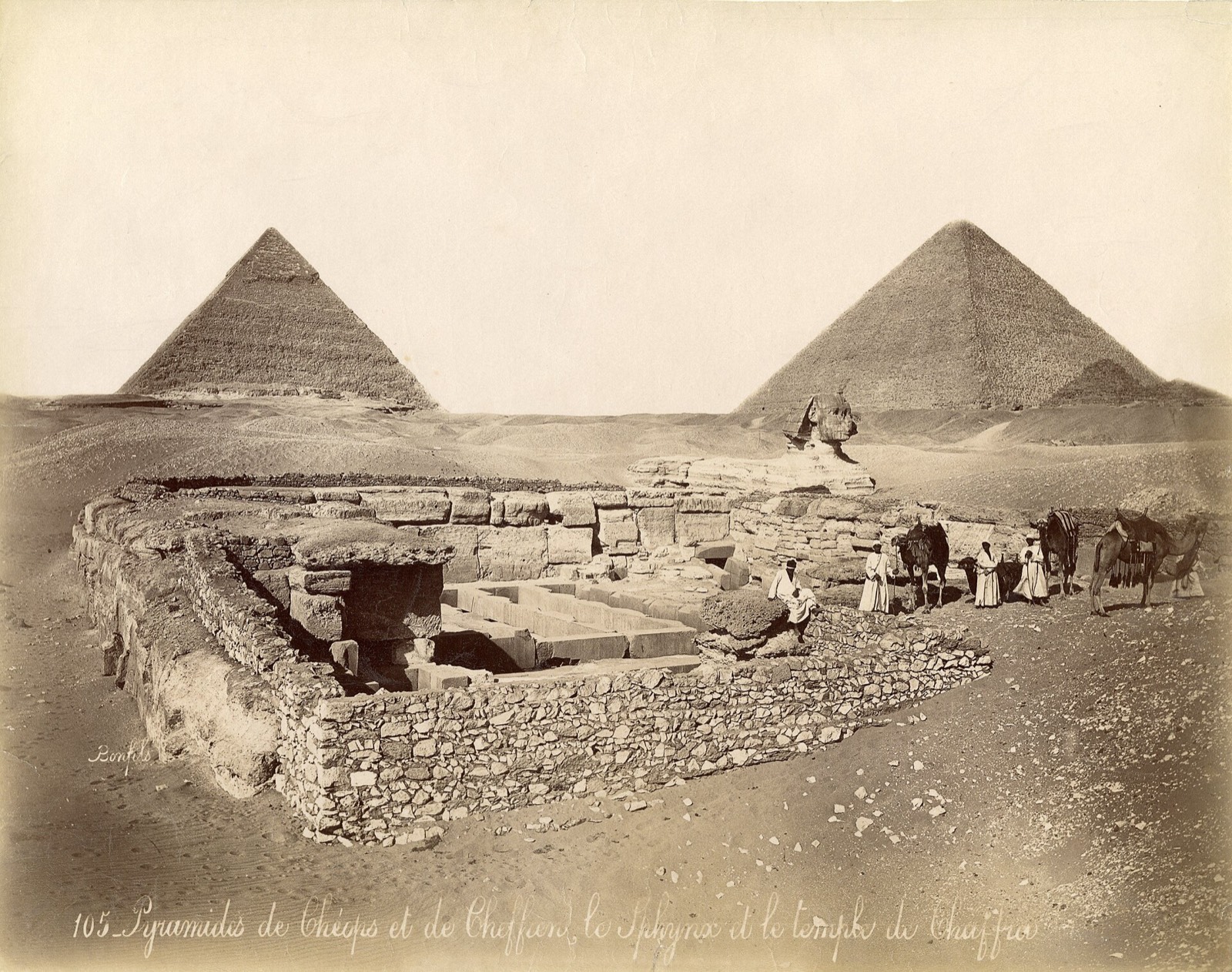 | Albumen print of the Giza pyramids | Félix Bonfils | 19th century | CC0 | Commons ↗ |
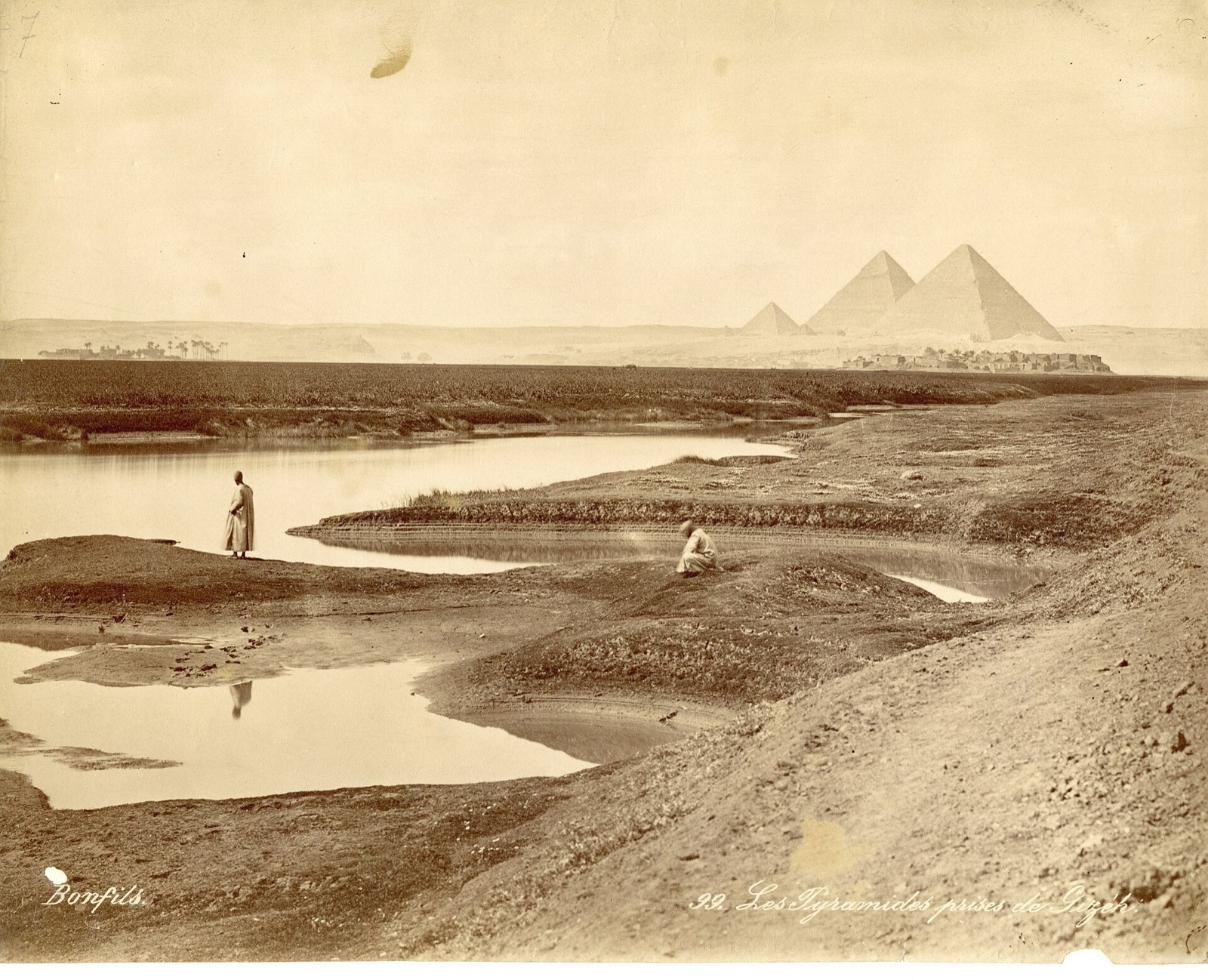 | Albumen print of the pyramid field | Félix Bonfils | 19th century | CC0 | Commons ↗ |
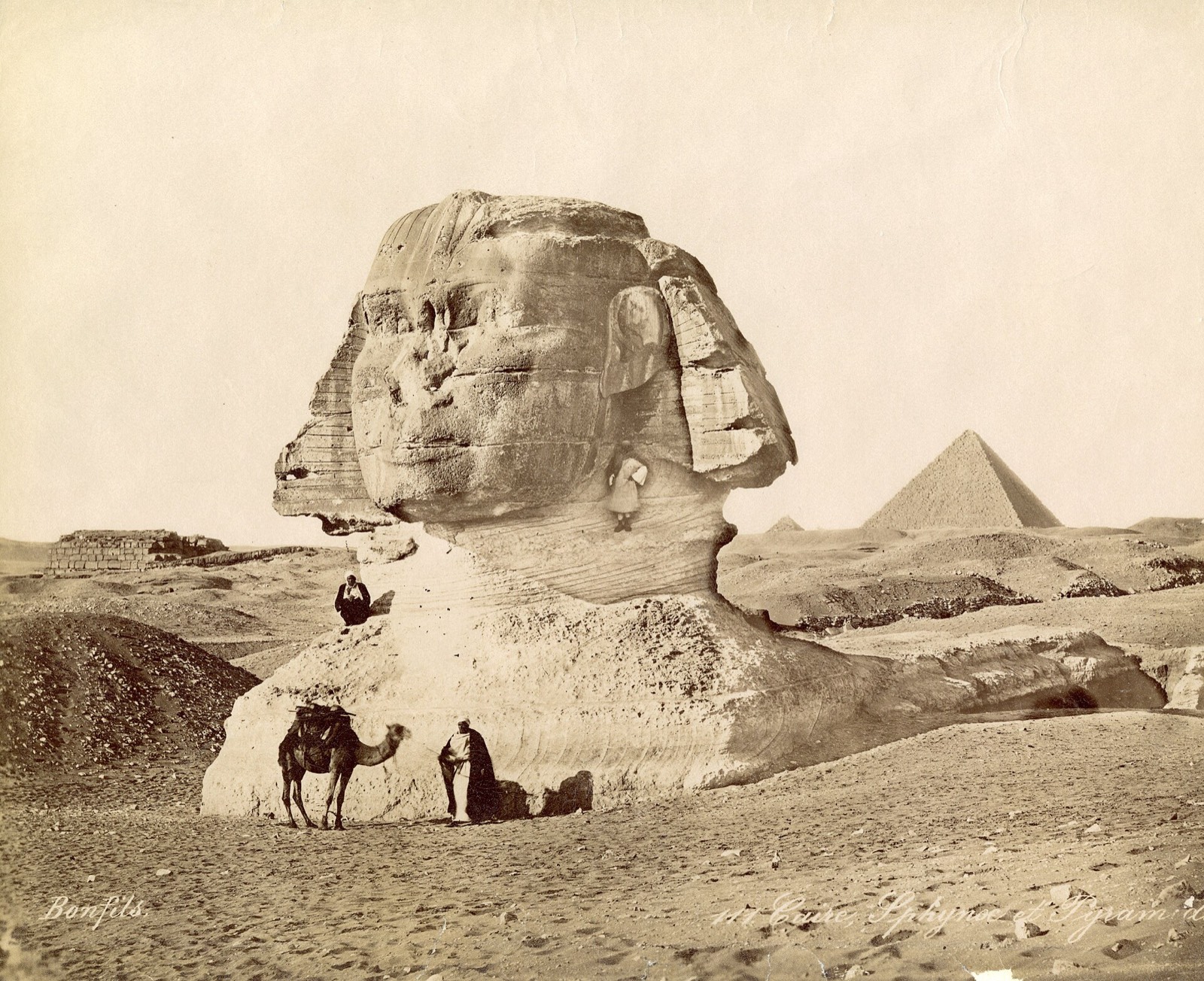 | The Sphinx, half-buried in sand | Félix Bonfils | 19th century | CC0 | Commons ↗ |
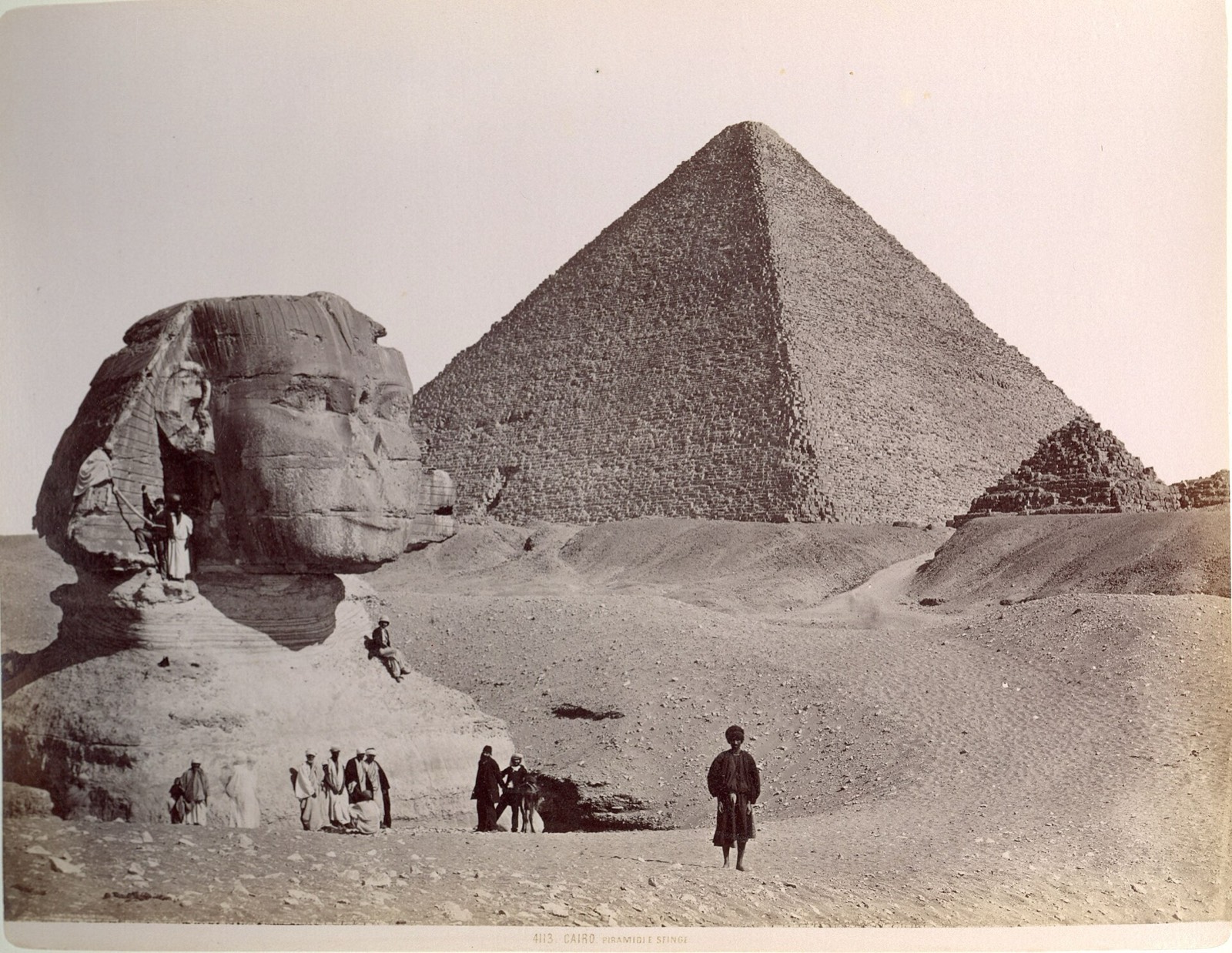 | The Sphinx and the valley temple of Khafre | Unknown | 19th century | CC0 | Commons ↗ |
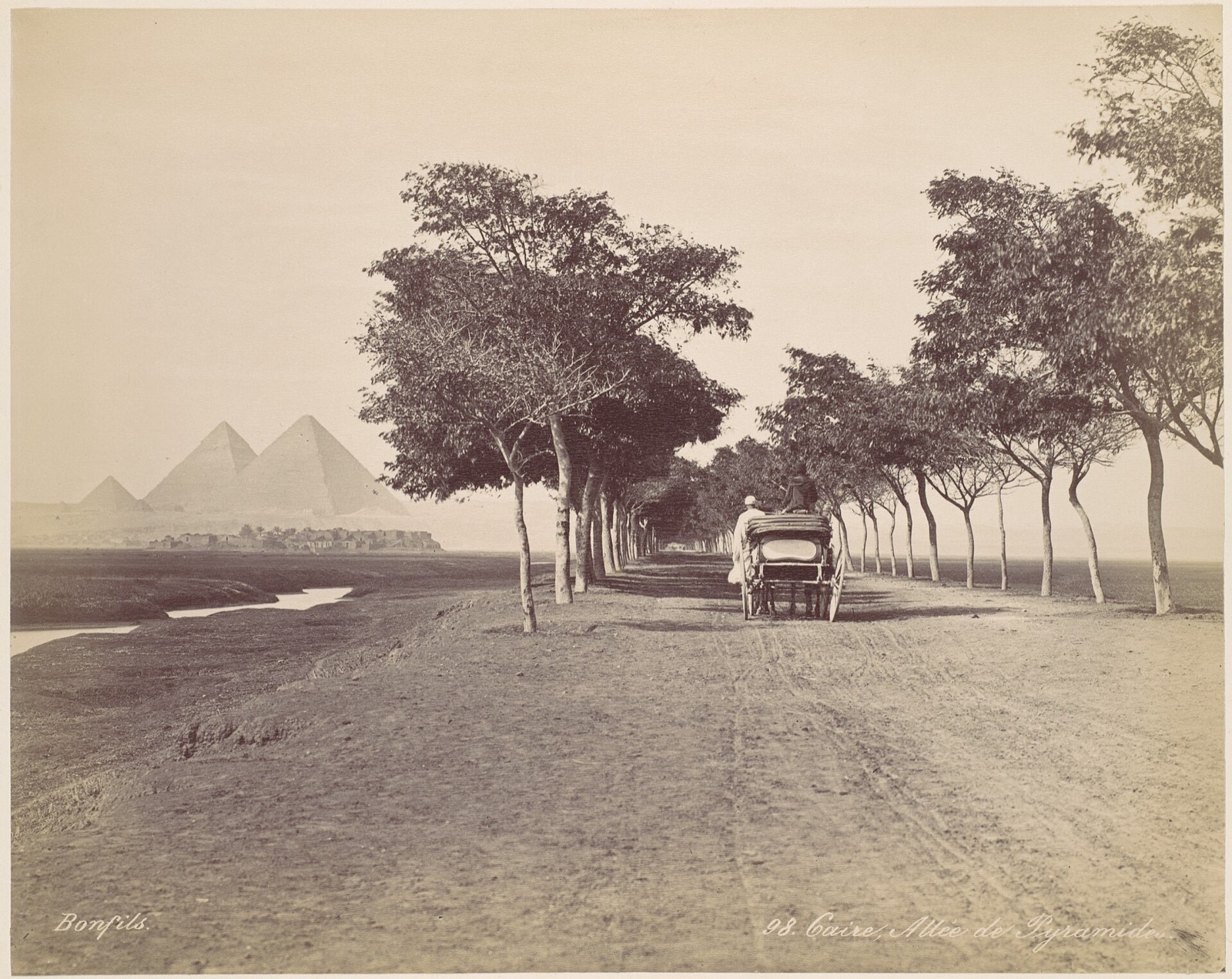 | "Allée de Pyramides" — the Giza group in a line | Félix Bonfils | c. 1870 | CC0 | Commons ↗ |
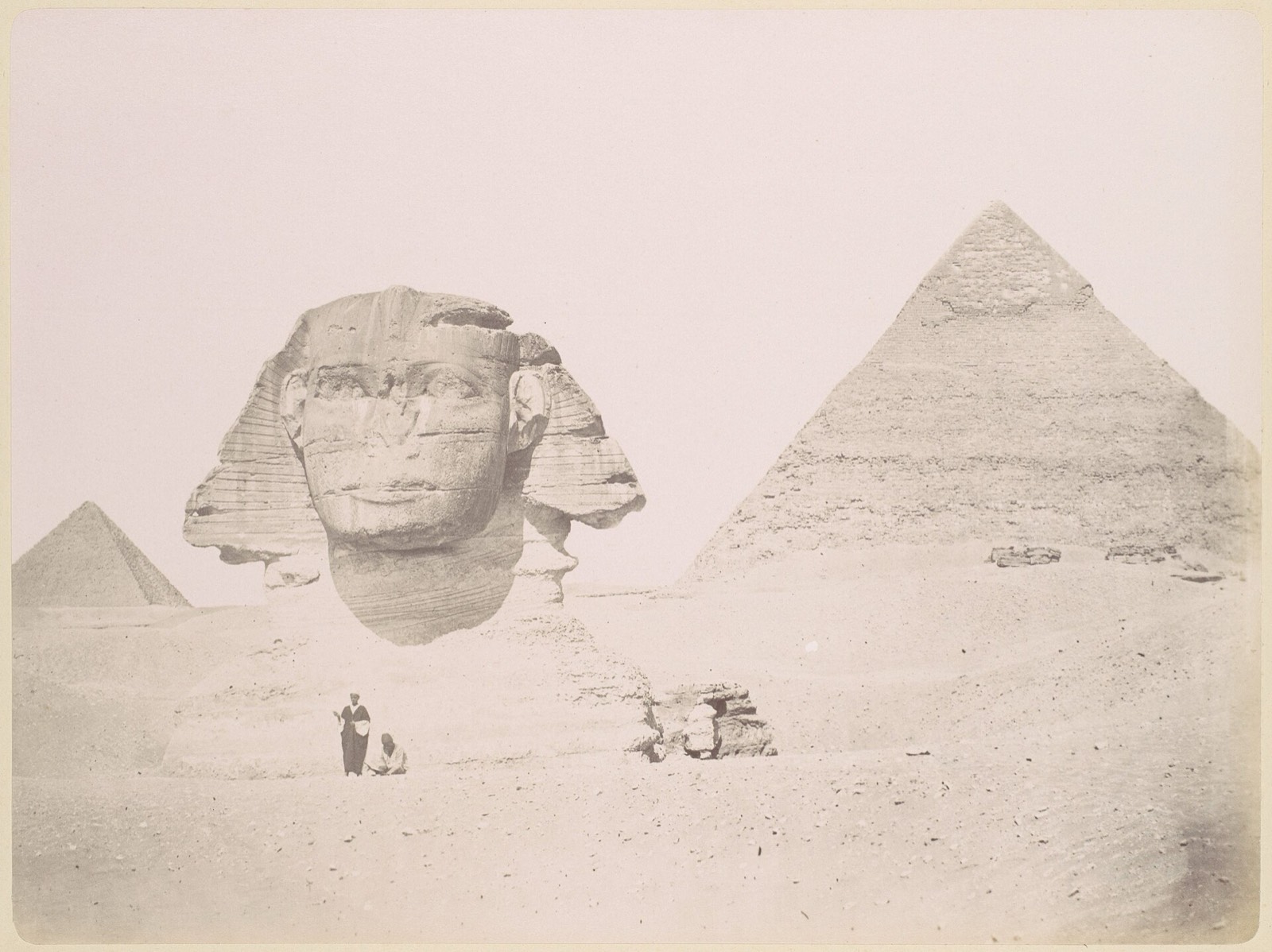 | Early photograph of the pyramids and the Sphinx | Félix Bonfils | 1860s | CC0 | Commons ↗ |
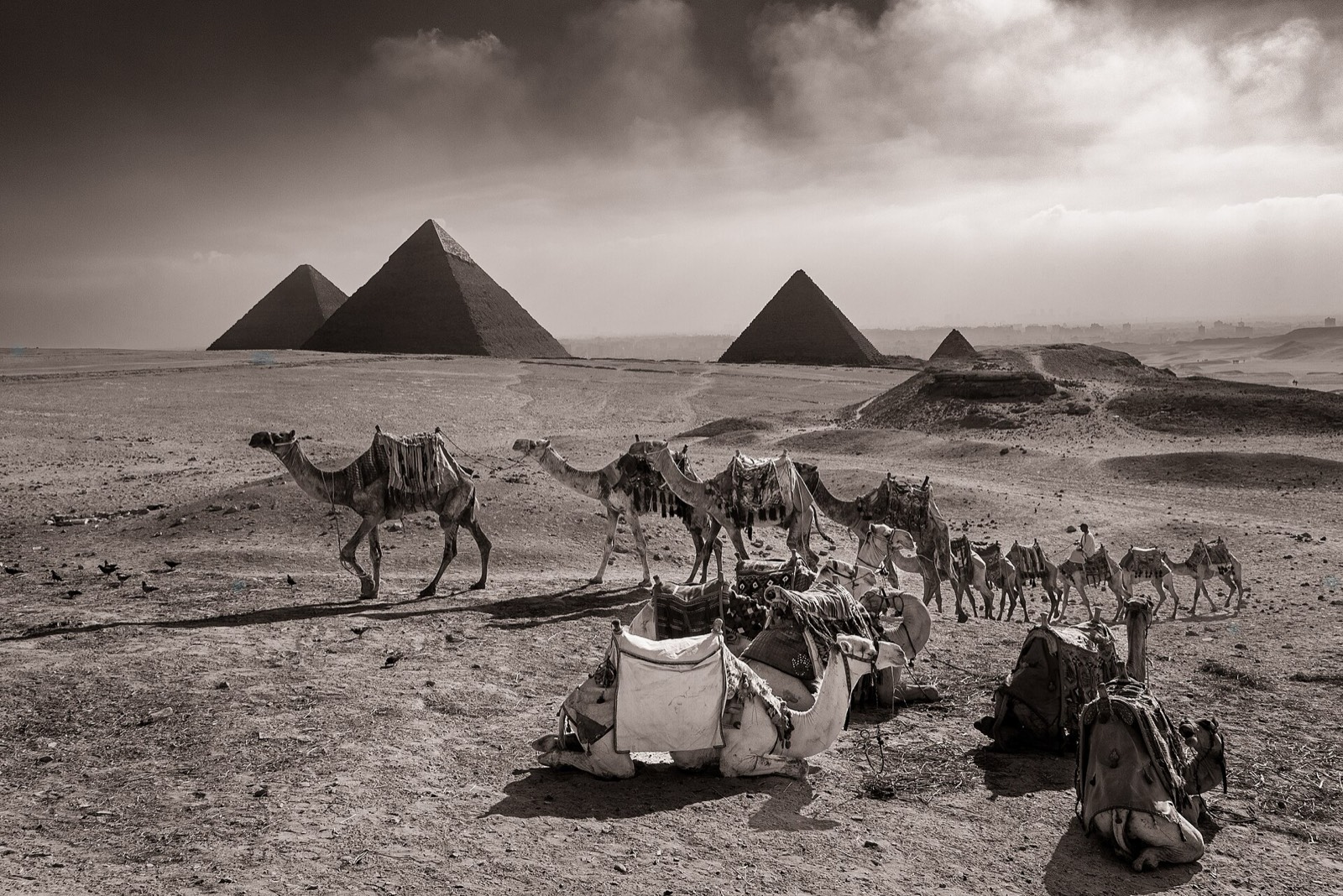 | The Giza plateau today | Mustang Joe | 2023 | CC0 | Commons ↗ |
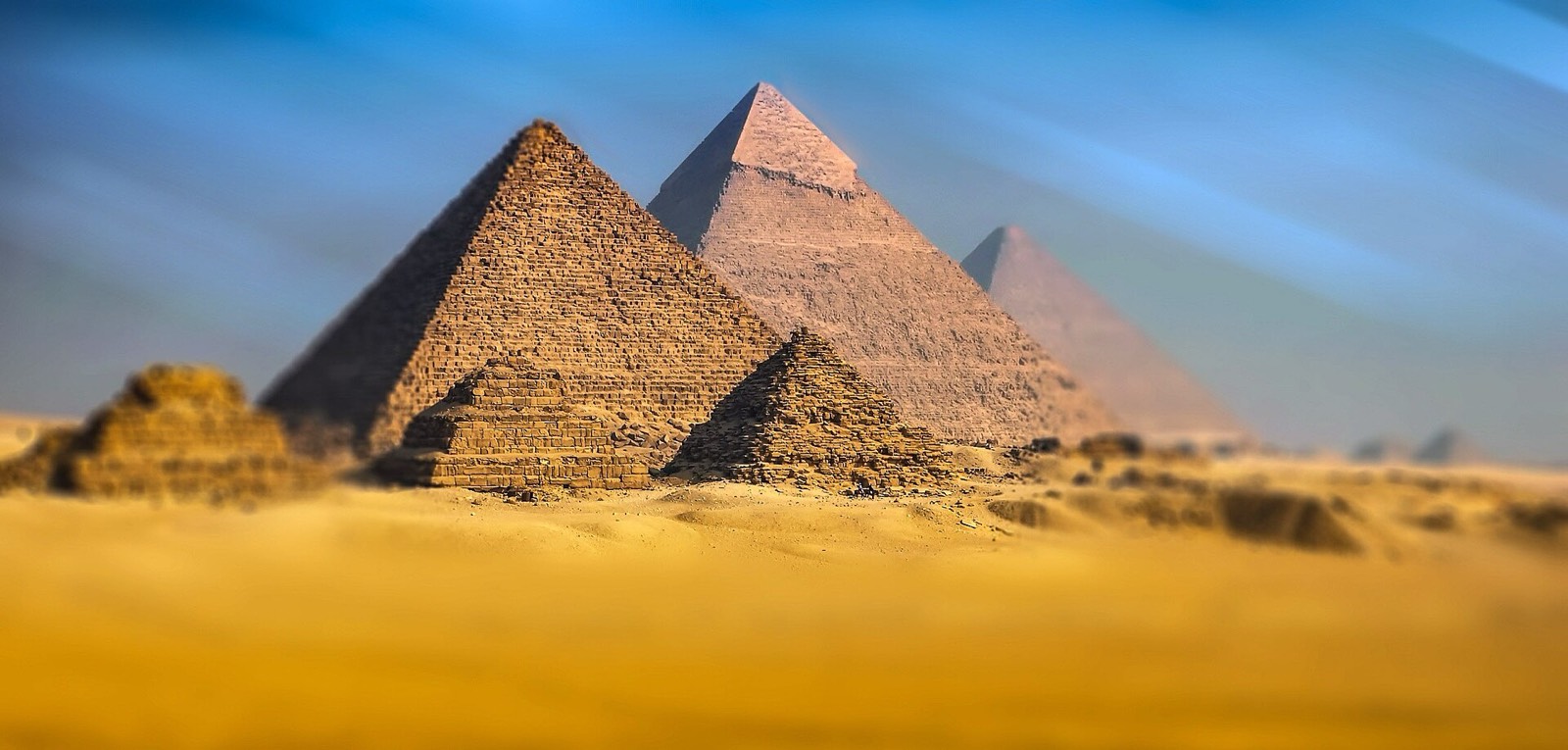 | The three pyramids from the desert plateau | Walkerssk | 2016 | CC0 | Commons ↗ |
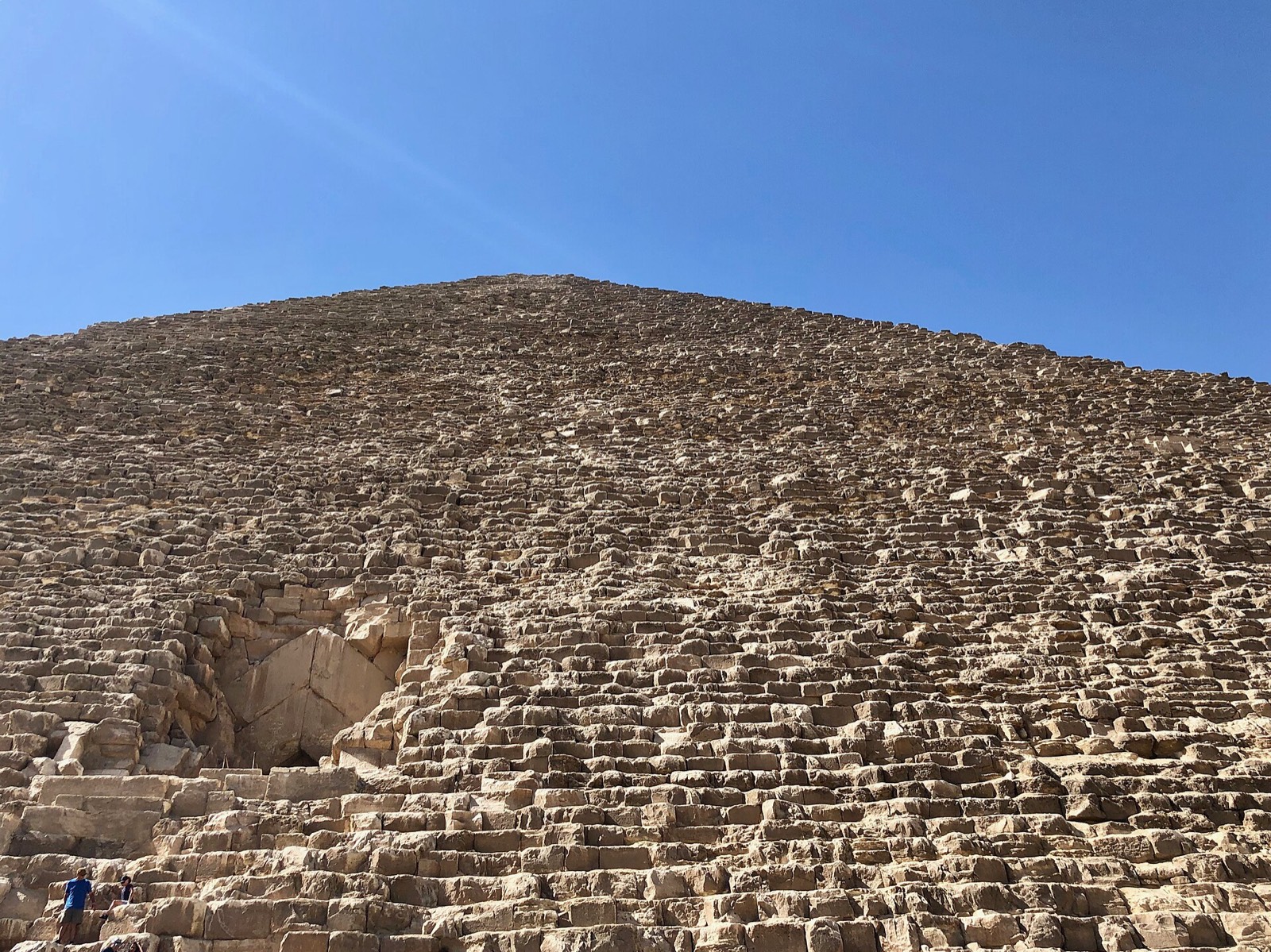 | The Great Pyramid of Khufu | Warren LeMay | 2019 | CC0 | Commons ↗ |
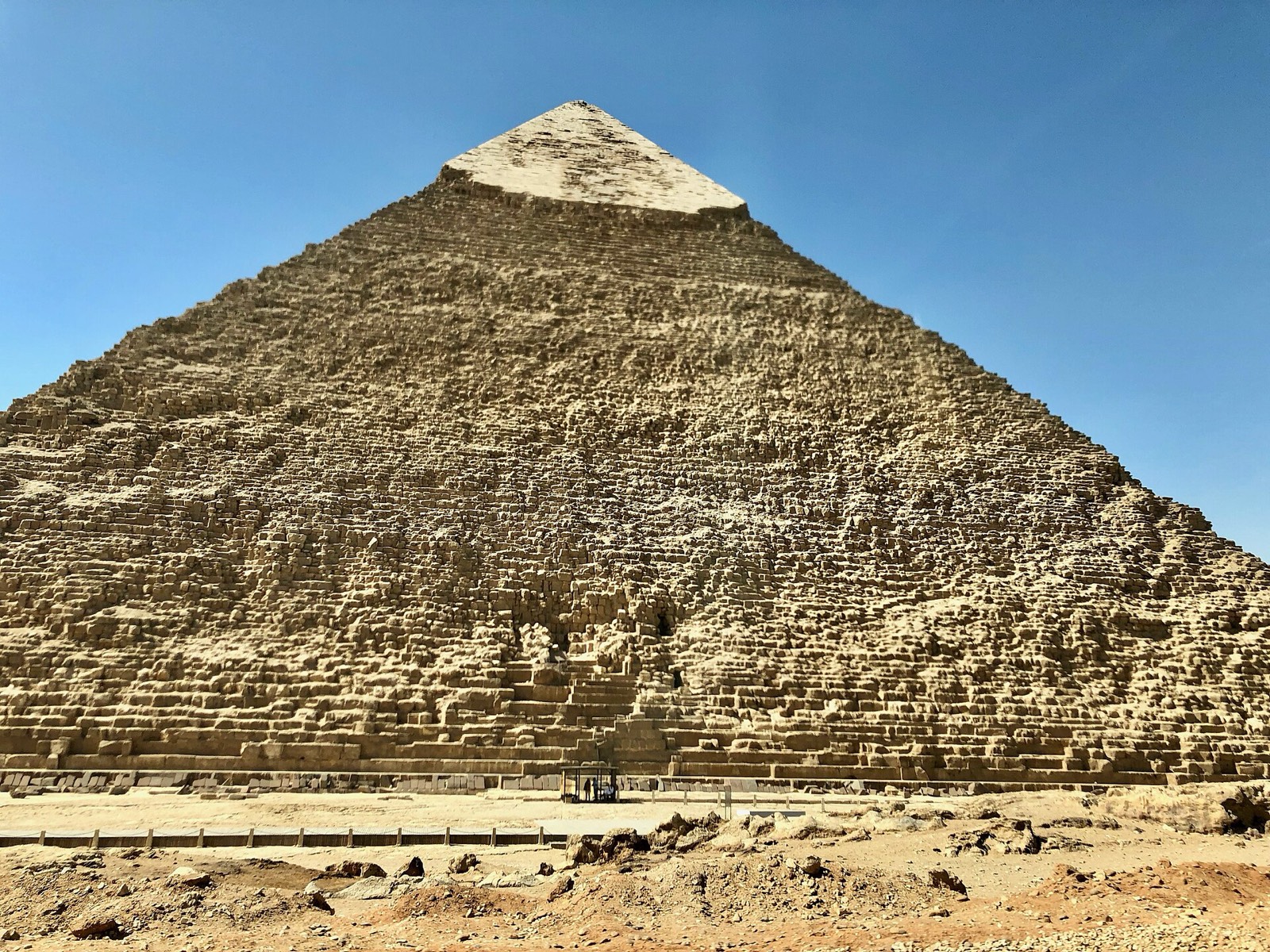 | The pyramid of Khafre, casing intact at the apex | Warren LeMay | 2019 | CC0 | Commons ↗ |
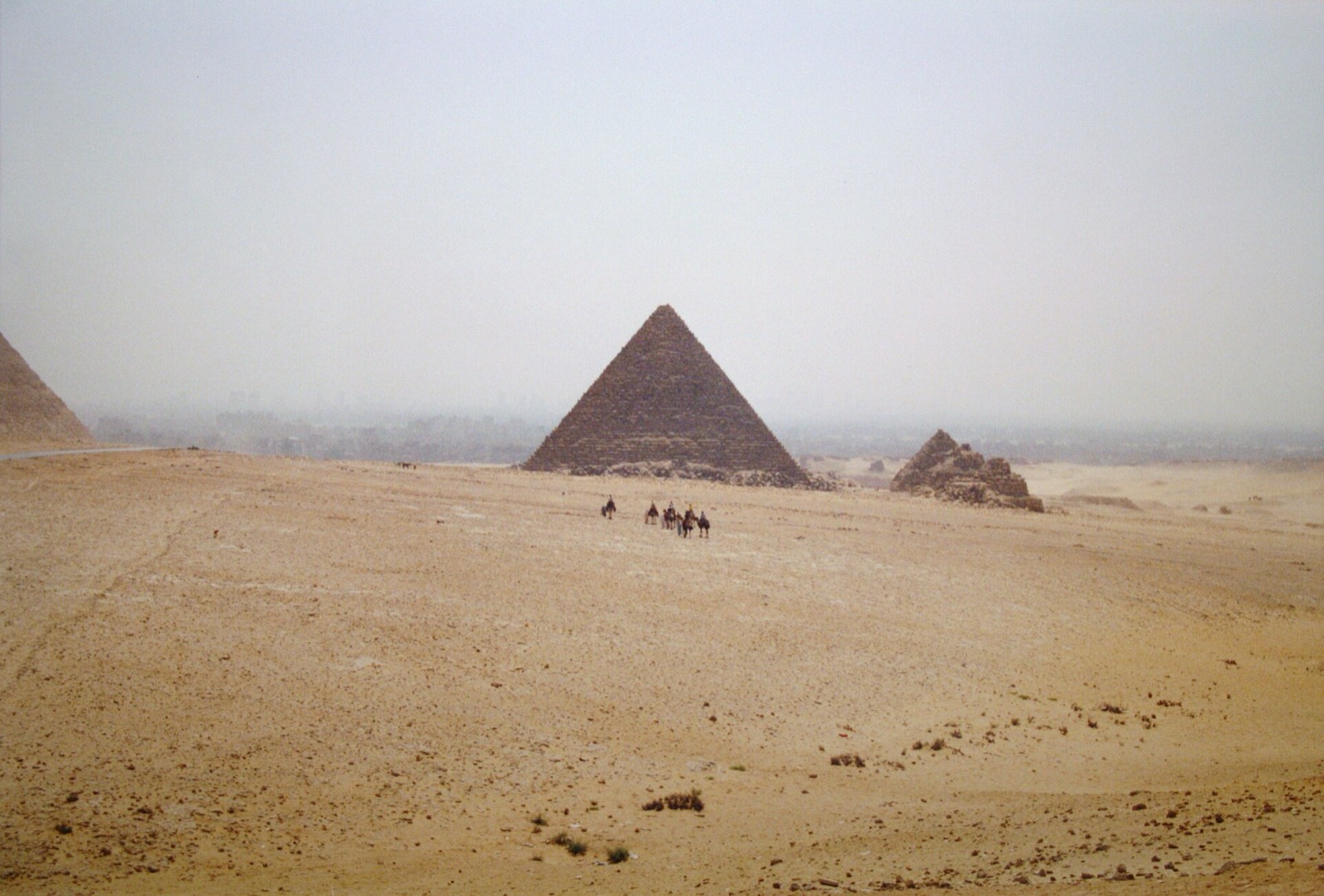 | The pyramid of Menkaure and its queens' pyramids | Gary Todd | 2002 | CC0 | Commons ↗ |
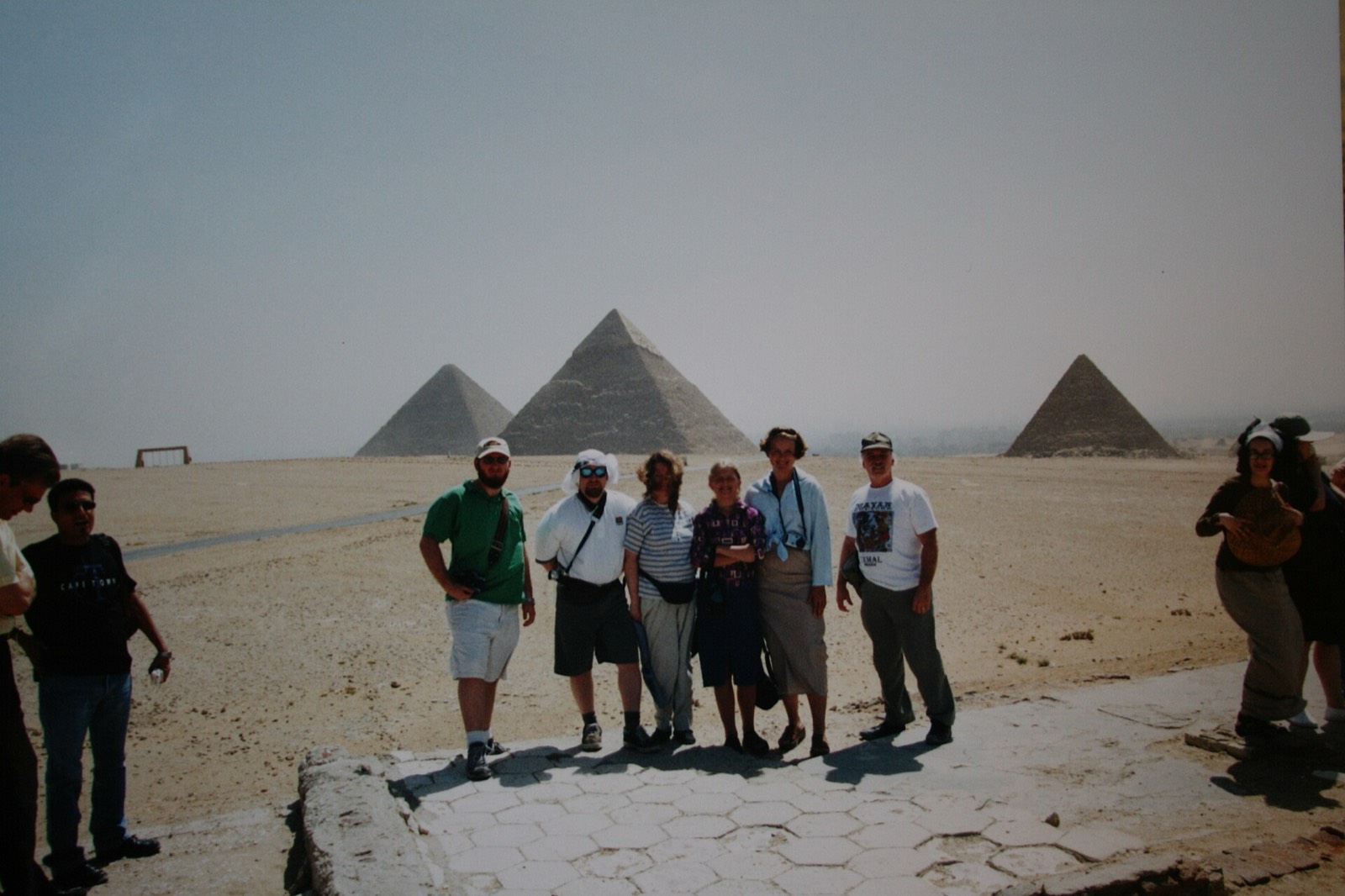 | All three pyramids in alignment | Gary Todd | 2002 | CC0 | Commons ↗ |
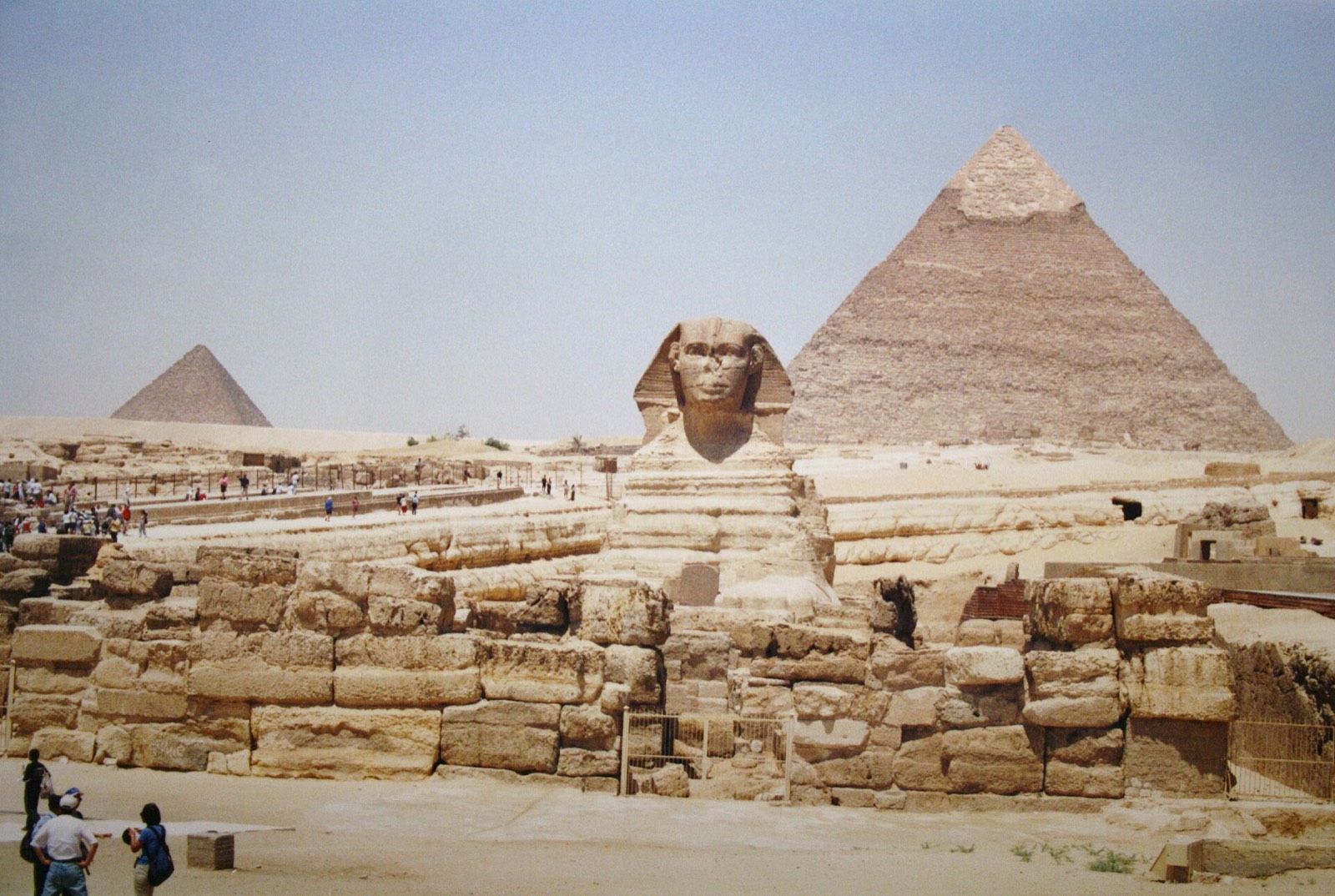 | The Sphinx with Khafre and Menkaure behind | Gary Todd | 2002 | CC0 | Commons ↗ |
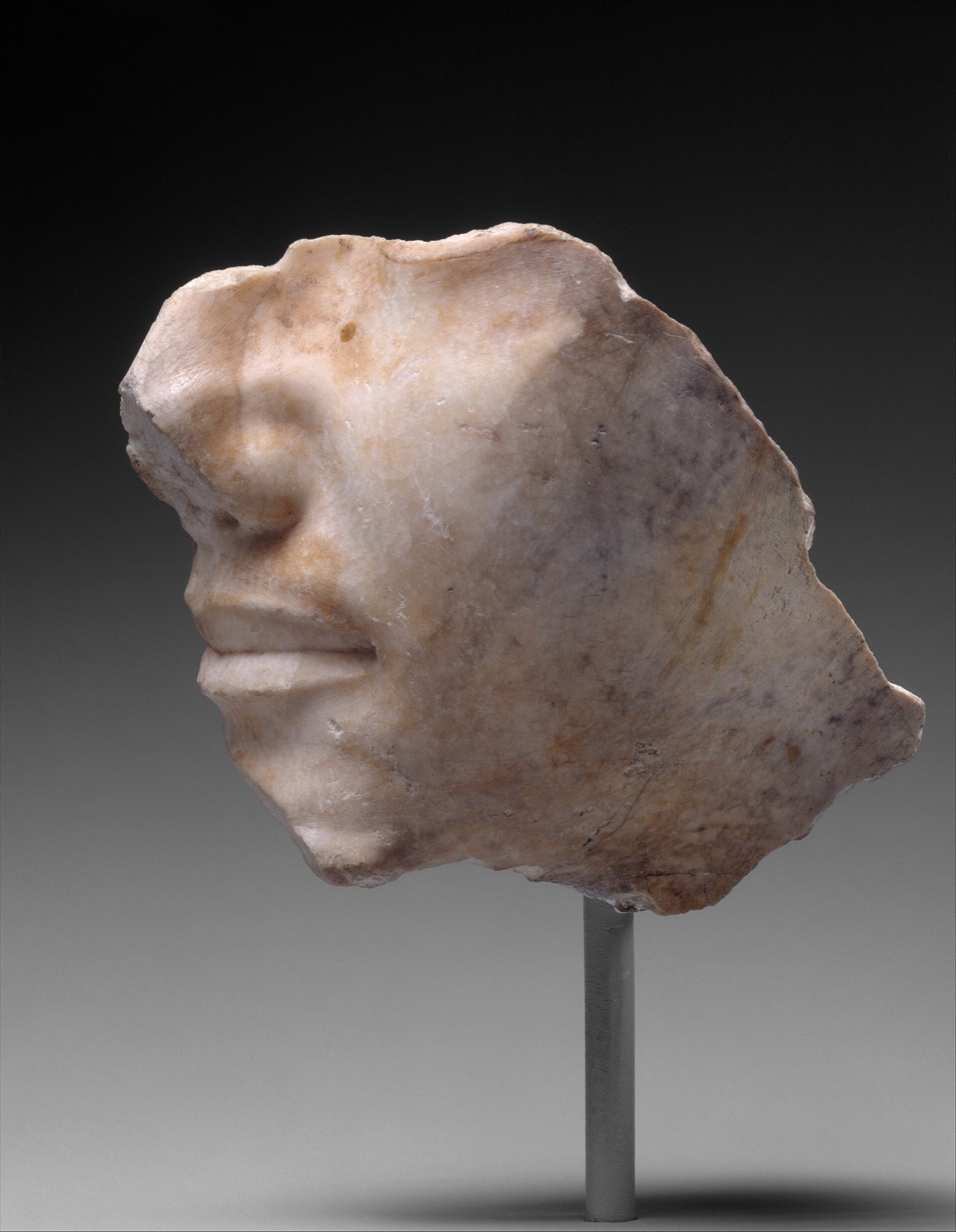 | Fragmentary face of King Khafre | Unknown | c. 2520 BCE | CC0 | Commons ↗ |
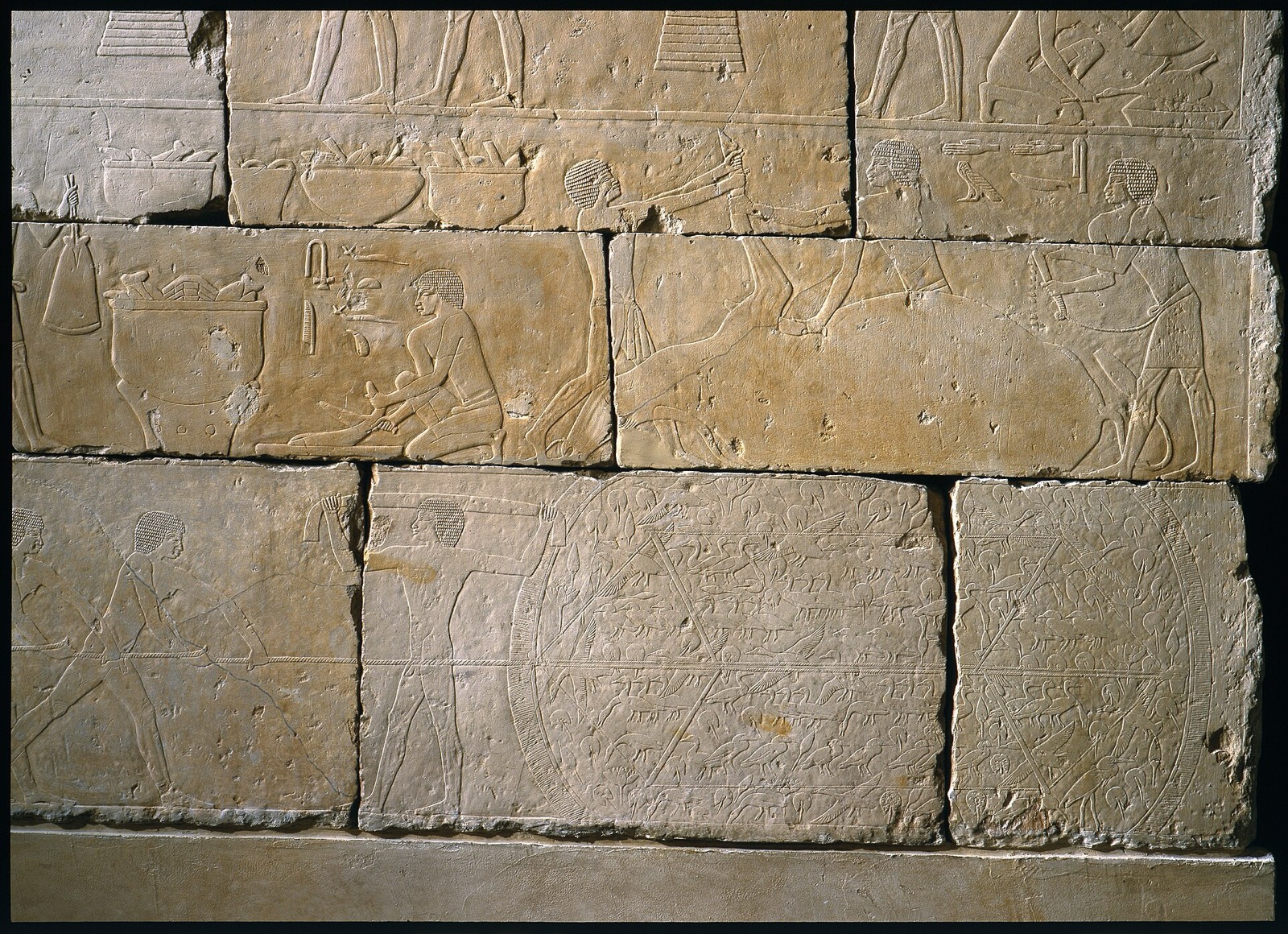 | Painted relief from an Old Kingdom tomb chapel | Unknown | c. 2446 BCE | CC0 | Commons ↗ |
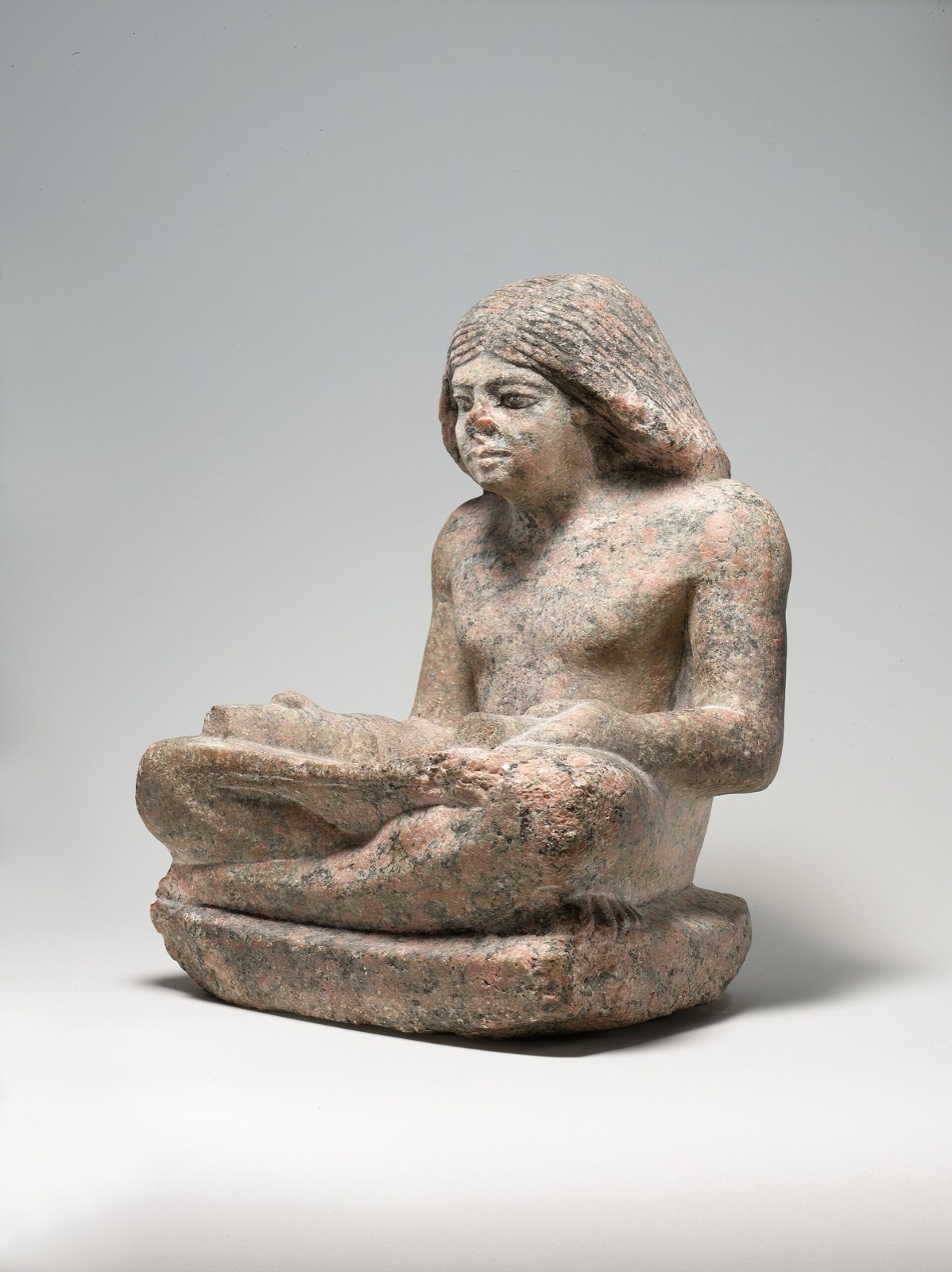 | Nikare seated as a scribe | Unknown | c. 2420 BCE | CC0 | Commons ↗ |
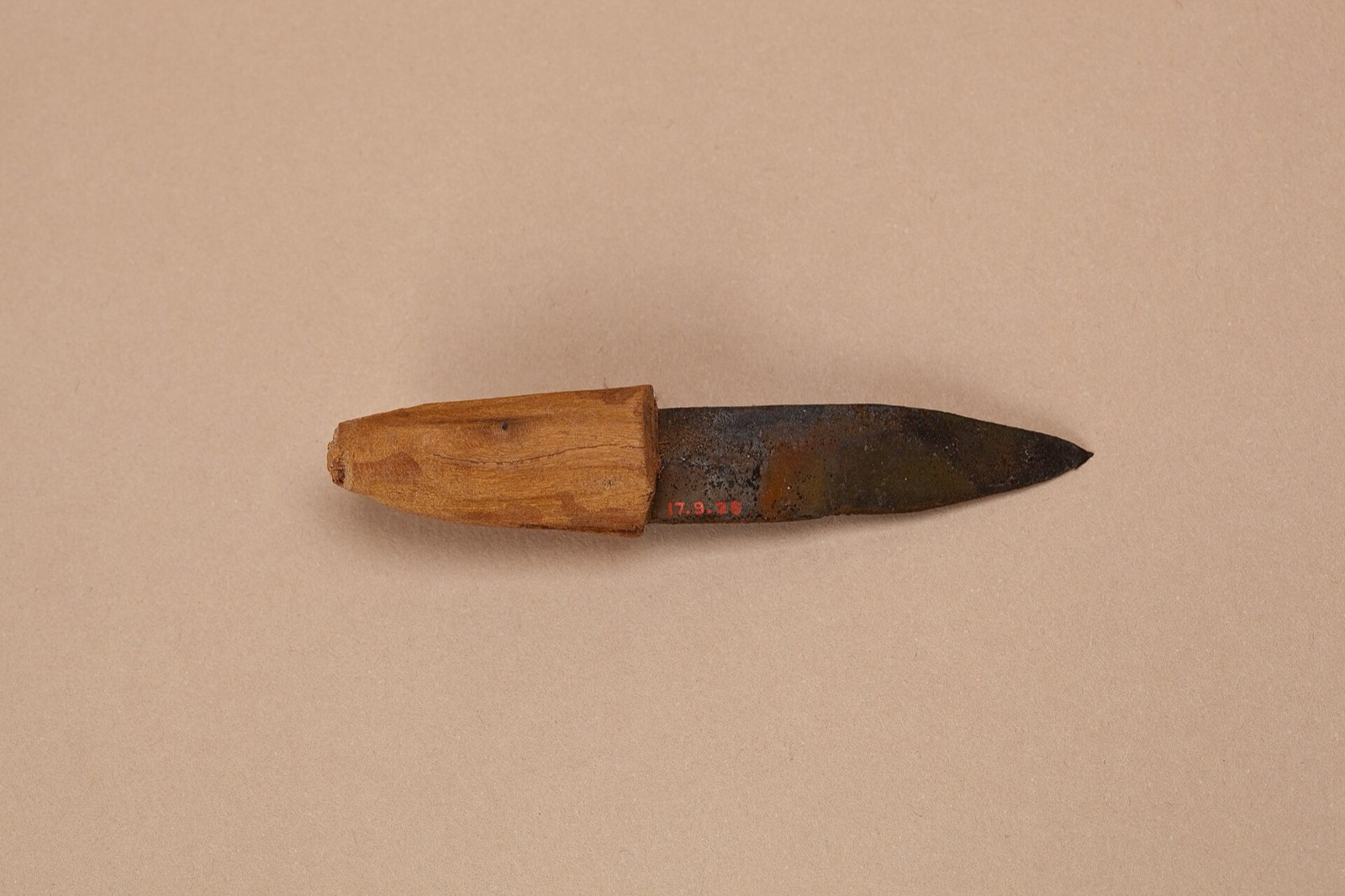 | A copper chisel of the kind used to dress stone | Unknown | c. 1981 BCE | CC0 | Commons ↗ |
Plates are drawn from the New York Public Library’s digitisation of the Description de l’Égypte and the Lepsius Denkmäler; the nineteenth-century photographic albums of the Archivio fotografico Museo Egizio, Turin; the open-access collection of the Metropolitan Museum of Art; and the Library of Congress. Modern colour photographs come from CC0 releases on Wikimedia Commons.
On the text
The writing on this site was produced for it as example content. It is intended to be accurate and is drawn from mainstream Egyptology, but it is a demonstration piece rather than a scholarly source — there are no footnotes, and it should not be cited.
Where a question is genuinely open — how the ramps worked, who commissioned the Sphinx — the text tries to say so rather than pick a side.