Section 03
The Pyramid of Menkaure
A tenth the volume of the Great Pyramid, and far more expensive per cubic metre. Menkaure was sheathing his in Aswan granite when he died, and the work stopped where it stood.
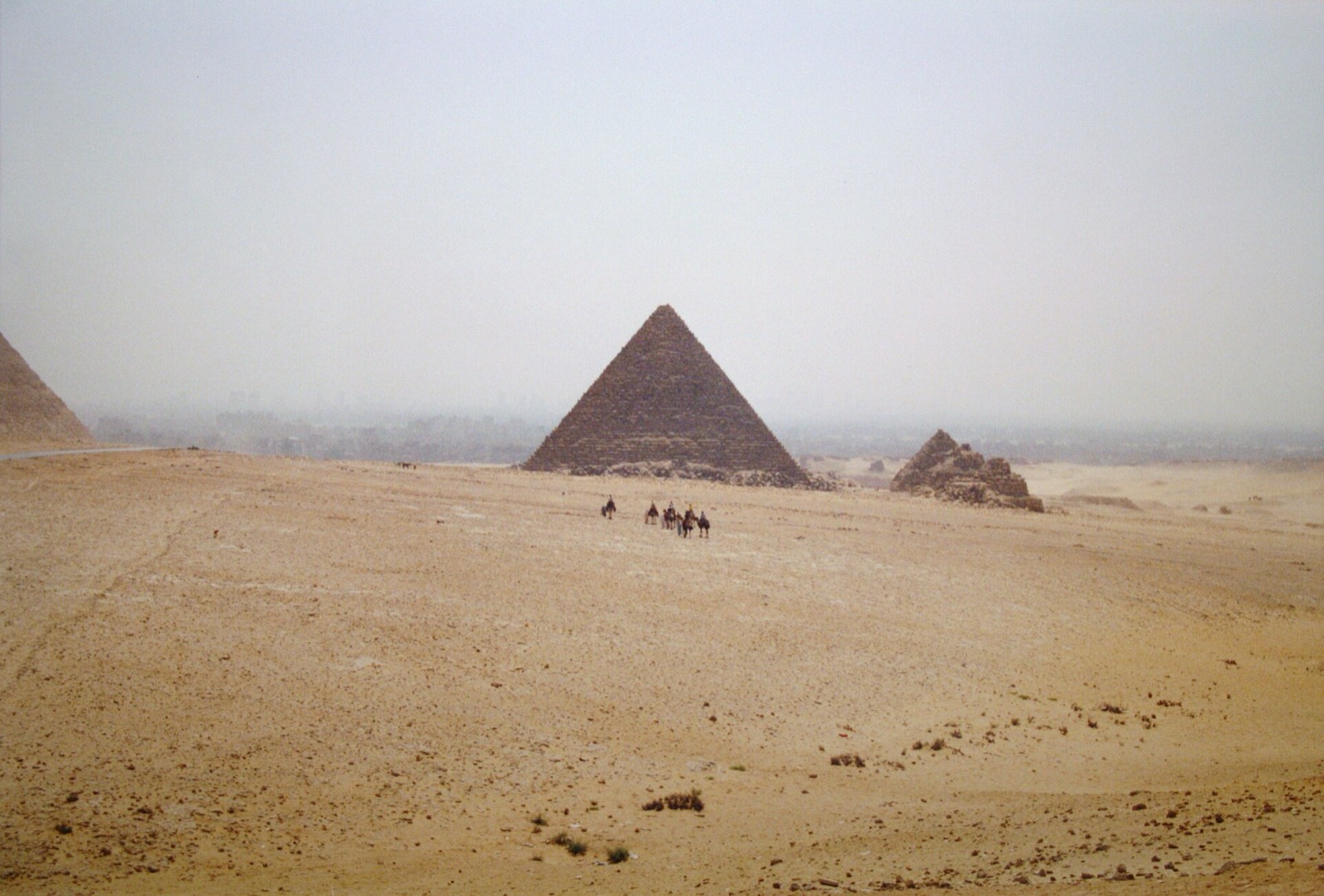
The footprint is slightly rectangular.
Around 61 m today.
The lowest courses, never dressed smooth.
Designated GIIIa, GIIIb and GIIIc.
The usual story about Menkaure’s pyramid is that it marks decline — that the Fourth Dynasty ran out of money, or ambition, or people. The stone says something more interesting.
Khufu and Khafre cased their pyramids in Tura limestone, quarried across the river and floated over in a few hours. Menkaure cased the bottom third of his in red granite from Aswan — a stone so hard that copper tools barely scratch it, hauled eight hundred kilometres downstream. Per block, it is a far more extravagant choice. He built a smaller monument out of much more difficult material.
The granite was never finished. The blocks were set in place with their outer faces left rough, still carrying the protective bosses used for handling them, waiting to be dressed back to a smooth slope. On the lowest courses you can see exactly where the dressing stopped — a horizontal line, part-way through the job, where the masons put down their tools.
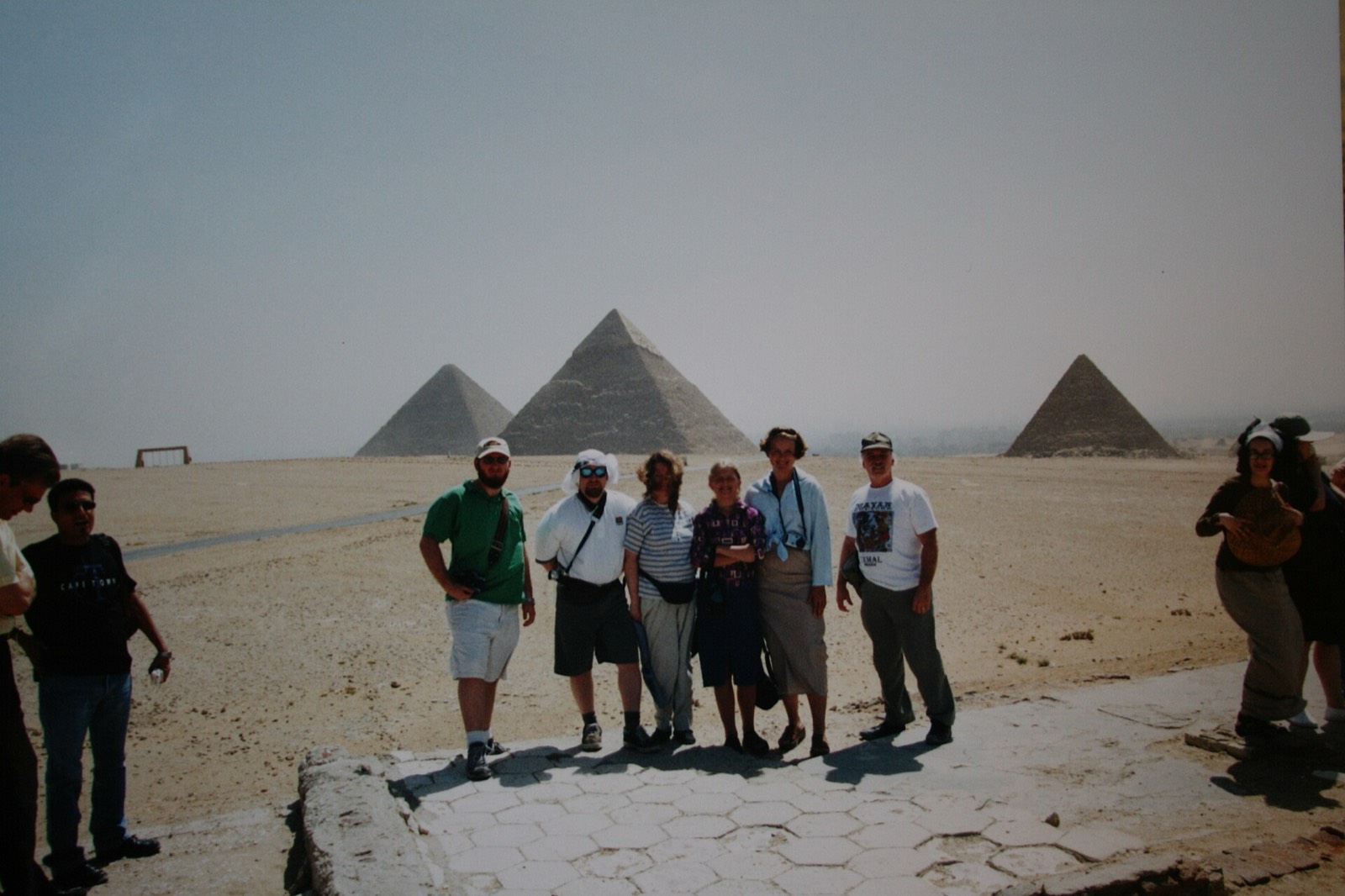
The gash in the north face
A large vertical scar runs down the middle of the pyramid’s north side. It is not ancient damage. In 1196 CE al-Malik al-Aziz Uthman, a son of Saladin, set out to demolish the Giza pyramids and started with the smallest.
His workmen spent eight months on it. They removed enough stone to leave the scar that is still there, discovered that taking the pyramid apart cost more than the stone was worth, and gave up. The chronicler recorded that the effort ruined the treasury and achieved nothing visible from a distance.
The pyramid was opened properly in 1837 by Howard Vyse, who found a basalt sarcophagus in the burial chamber. He shipped it to England in 1838 aboard the Beatrice, which sank off Cartagena. It is still on the sea floor.